Professional Ant Control & Colony Treatment in the UAE
Scientific pest management solutions that target pheromone trails and aim to reach the reproductive queen inside hidden structural voids, reducing scatter and budding.
- Non-repellent bait gels carried by worker ants toward the queen inside the nest
- Targeted protocols for Pharaoh ants designed to reduce colony splitting and budding
- High-precision void injection behind kitchen cabinetry, tiles, and electrical junction boxes
- Products selected for residential use and applied per label instructions, with guidance for families and pets across the UAE
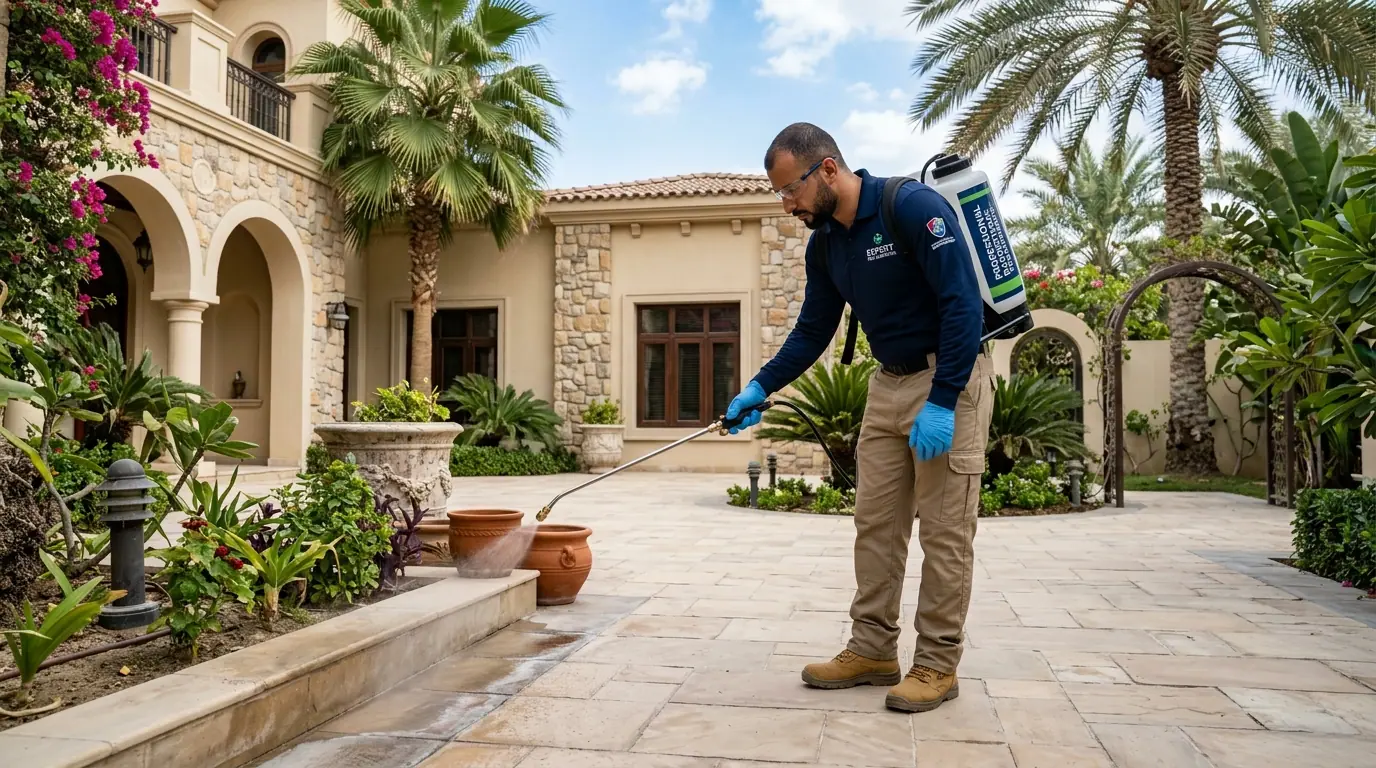
Queen Targeting
Slow-acting bait matrix carried by workers to the nest core
Usually No Evacuation
Low-odor targeted gels, usually with minimal kitchen downtime
Pharaoh Ant Specialists
Techniques designed to reduce secondary budding colonies
Follow-Up Visits
Follow-up visits can be arranged depending on the case to review results with you
Ant Biology in the UAE Climate & Why Surface Sprays Often Fall Short
Ants in the United Arab Emirates represent a real biological challenge for villas, apartments, and commercial facilities. With relentless outdoor desert heat and continuous indoor air conditioning, ant colonies actively forage indoors in search of stable moisture gradients, sugary carbohydrates, and lipid-rich proteins. An ant infestation is more than a visual annoyance on kitchen counters; foraging ants trek through drainage vents, trash chutes, and outdoor soil, mechanically vectoring pathogenic bacteria across food preparation countertops. Even more challenging are Pharaoh ants (Monomorium pharaonis)—microscopic, polygynous pests with multiple reproductive queens nested within electrical sockets and drywall partitions. When exposed to conventional over-the-counter repellent aerosol sprays, Pharaoh ant colonies can fragment through a survival response called "budding," turning a localized nuisance into multiple satellite nests across the building.
Pharaoh Ants (Monomorium pharaonis): Microscopic yellowish-brown ants with multi-queen colonies; DIY aerosol spraying can trigger colony splitting (budding) throughout walls.
Black House Ants (Ochetellus glaber): Establish robust, visible pheromone highways linking outdoor interlock soil and gardens to indoor food pantries.
Carpenter Ants (Camponotus spp.): Excavate hollow nesting galleries inside damp structural timbers, door frames, and wooden joinery, causing cosmetic and physical degradation.
Invisible Pheromone Navigation Trails: Ants lay invisible chemical hydrocarbon markers on baseboards and floors; ordinary mopping may not fully remove these persistent roadmaps.
Prevalent Ant Species & Their Prime Infestation Environments
Species identification precedes every intervention so the bait can match the colony's dietary preferences
Pharaoh Ants in Towers & Flats
Ultra-small foragers inhabiting electrical switch boxes, bathroom tile junctions, and plumbing shafts, gravitating towards greases, meats, and sweets.
Villa Garden & Interlock Ants
Massive subterranean nests excavated beneath interlocking driveway stones and palm roots, infiltrating ground floors via weep holes and threshold seals.
Carpenter Ants in Joinery
Wood-boring foragers chewing through damp architectural woodwork and kitchen cabinetry to establish brood chambers, shedding fine wood shavings.
Seasonal Alate Swarmers
Winged reproductive ants emerging after humid spells and sporadic rains to mate and inaugurate new colonies inside false ceilings and store rooms.
Want us to price this for you now?
Send us the size and location and we will reply with a clear quote before any commitment.
Signs of an Established Ant Colony Inside Your Property
How to distinguish between random lone scouts and a well-entrenched structural nest
1Unbroken Foraging Highways (Pheromone Trails)
Continuous columns of ants methodically marching along baseboards, counter edges, or behind appliances usually indicate a chemical pheromone trail leading to an active nest.
2Frass & Excavated Sand Piles (Substrate Debris)
Tiny piles of grit, discarded insect fragments, or wood dust appearing near tile expansion joints or door jambs can indicate active nest excavation.
3Indoor Presence of Winged Reproductive Swarmers
Finding winged alates hovering around ceiling lights or dead on window sills can indicate that a mature colony is residing inside your structure and releasing reproductive castes.
4Persistent Presence in Wet Zones & Bathrooms
Ants clustering around vanity drains, shower grout, and AC condensation drip trays can indicate foraging for moisture rather than obvious food scraps.
Prime Interior Harborage Sanctuaries in Modern UAE Buildings
Where do the queens nest? Inspection focal points examined by our technicians
Sub-Cabinetry Voids & Kickplates
Dark, humid recesses beneath kitchen counters sheltering organic crumbs, moisture leaks, and undisturbed darkness.
Electrical Sockets & Conduit Conduits
Warm electrical environments providing ideal nesting temperatures and interconnected conduit pathways between adjacent rooms.
Tile Expansion Gaps & Degraded Grout
Hollow spaces beneath floor tiles and wet area seals allowing expansive brood chamber development.
Refrigerator & Dishwasher Motor Housings
Constant electromagnetic heat combined with condensation evaporator trays can create year-round warm breeding conditions.
Indoor Planter Soil & Balcony Planters
Rich, moist organic soil providing exterior-like nesting conditions just inches away from living rooms.
Why Supermarket Sprays & DIY Remedies Can Worsen Infestations
Biological realities that can make consumer aerosols counterproductive
Colony Budding
Repellent pyrethroid aerosols mostly affect visible foraging workers, while the hidden colony may respond to the disturbance by splitting into multiple satellite colonies across the home.
Failure to Reach the Subterranean Queen
Reproductive queens do not forage. They are fed through trophallaxis (communal regurgitation from workers). Quick-kill sprays can kill workers before they return to the nest with the active ingredient.
Bait Aversion from Overly Rapid Products
Ants are chemically sensitive; if cheap store-bought baits act too fast, workers may perish beside the bait station, which can lead the colony to avoid that food matrix.
Ignoring Structural Entry Apertures
Treating visible ants without repairing masonry cracks and utility penetrations can leave an open doorway for neighboring colonies to reinvade.
Our 6-Step Integrated Ant Colony Control Protocol
An IPM approach combining nutritional attraction, slow-acting transfer, and structural sealing
Species Identification & Nutritional Phase Mapping
Close inspection under magnification to determine whether the colony is currently carbohydrate-seeking (sugars) or protein/lipid-seeking (fats) so the bait matrix can be chosen to match.
Precision Micro-Dot Hydrogel Baiting
Deploying palatable, slow-acting hydrogel baits that worker ants ingest and transport back to the nest.
Non-Repellent Void & Crevice Treatment
Injecting non-repellent liquid formulations into deep structural cavities; foraging ants usually walk across the treated surface without avoiding it, transferring the active ingredient to nestmates.
Pheromone Trail Neutralization
Treating existing chemical marching tracks with suitable cleaning agents to help remove scent waypoints and disrupt direction cues for incoming foragers.
Perimeter Barrier & Exclusion Sealing
Creating an exterior protective zone around villa foundations and sealing structural gaps around pipe penetrations, window frames, and exterior expansion joints.
Follow-Up Review of Colony Response
Where needed, a follow-up visit to evaluate bait consumption, assess how far worker activity has declined, and review results with you.
Pre-Service Preparation Guidelines for Residents
Simple actions that help our targeted baiting program work better
- Please avoid using aerosol bug sprays or harsh disinfectant wipes on ant trails for 48 hours prior to service.
- Leave existing ant trails undisturbed so our technician can trace the precise ingress vector into the wall.
- Store all exposed sweets, bread, honey, and open pet food in airtight glass or rigid plastic containers.
- Wipe up surface crumbs and grease splatters around toasters and stoves to remove competing food alternatives.
- Repair minor plumbing drips under sinks to eliminate competing water sources.
Post-Treatment Guidelines to Help Maintain Results
How to manage the bait matrix while the colony is feeding on it
- Do not wipe, wash, or disturb the small gel bait dots placed in kitchen corners and cabinet interiors.
- You may see a temporary surge in ant activity around bait sites during the first few days; this can indicate that the colony is feeding on the bait.
- Do not squash or spray feeding ants; they need to survive long enough to carry the bait matrix back to the colony.
- Keep treated areas dry and avoid splashing wash water into back corners of kitchen cabinetry.
- Contact our technical support desk if ant activity persists beyond about 10 days post-treatment so we can review the case with you.
A question before you book?
Message us on WhatsApp with your situation and we will suggest the best option, no obligation.
Tailored Protocols Across Diverse UAE Property Types
Solutions tailored to specific architectural and commercial environments
Dual-perimeter intervention addressing garden soil, interlock paving, and external boundary walls, paired with interior bait hydrogels in pantries and utility areas.
Focused Pharaoh ant control targeting shared vertical utility chases, electrical conduits, and bathroom plumbing voids without disturbing adjacent neighbors.
Treatments planned with food hygiene guidance in mind; tamper-resistant numbered bait stations and inspection logbooks.
Discreet non-disruptive treatments targeting raised flooring, server cable trays, and employee breakroom pantries during off-peak hours.
Comparison: Nojoom Al Azm vs Surface Spraying & Consumer Products
| Technical Dimension | Nojoom Al Azm IPM Protocol | Surface Spraying & Consumer Products |
|---|---|---|
| Primary Biological Target | The reproductive queen and brood, via delayed bait transfer through trophallaxis. | Mainly visible foraging workers, with an effect that is often short-lived. |
| Pharaoh Ant Management | Non-repellent bait matrices designed to reduce colony budding and dispersion. | Repellent sprays can trigger fragmentation into new nests. |
| Occupant Safety & Kitchen Downtime | Targeted low-odor gels that usually do not require emptying the kitchen or evacuating the family. | Airborne misting may require clearing utensils, and odor can linger depending on the product. |
| Follow-Up After Service | Follow-up visits arranged depending on the case to review how the colony responds. | Technical follow-up is usually not available. |
Transparent Pricing Factors for UAE Ant Control
Clear commercial terms based on property footprint, species complexity, and follow-up scope
Target Ant Species
Multi-queen Pharaoh ant infestations may require more varied hydrogel baits and closer follow-up than simple garden black ants.
Property Scale & Structural Layout
Villas with expansive gardens and outbuildings require substantial exterior barrier treatments versus compact flats.
Infestation Depth & Void Complexity
Infestations residing within multi-tier drywall ceilings require specialized cavity injection tooling.
Service Level & Follow-Up Scope
Single targeted treatments versus year-round preventative commercial maintenance agreements.
Indicative Pricing Estimate
Pricing is confirmed after we collect property and ant species details, with tailored on-site quotes for villas and commercial venues.
Each quote explains what is included, such as initial scoping, bait deployment, void injections, and any agreed follow-up visits.
Prevention Tips to Help Keep Ants Out of Your Home
Airtight Storage for Sugars and Pantry Goods
Transfer cereals, dry flour, sugar, and pet food into airtight glass or heavy-duty plastic containers with rubber gaskets.
Immediate Remediation of Liquid Spills
Ants can detect tiny sugar residues from a distance; clean syrup and juice spills promptly with warm soapy water.
Renew Grout & Silicone Weatherstripping
Inspect and reseal cracked tile grout around sinks and install door sweeps along external entry thresholds.
Prune Overhanging Tree Foliage
Trim exterior garden branches touching villa exterior walls to reduce natural aerial bridges leading to upper windows.
Deal with Troublesome Ant Infestations with Nojoom Al Azm
Move beyond temporary spraying and target the reproductive queen. Book our scientific ant control service with targeted hydrogel baits and a clear treatment plan.
Everything you need to know about this service
In most residential ant treatments, there is no need to evacuate or unpack your cabinets; your technician will confirm after inspection. We use targeted, low-odor hydrogel baits and precise void injections that do not typically disperse into the air, so your family can usually go about daily life, following the technician's instructions.
This temporary influx can indicate that the ants are being drawn to the bait. Our gels contain attractants designed to recruit foraging workers, which gather to consume the matrix and carry it back to the hidden queen. Activity usually declines within days, though timing varies with colony size and species.
Pharaoh ants are tiny (1.5-2 mm) light brown ants with multiple queens per nest. When sprayed with consumer aerosols, the colony senses existential danger and undergoes "budding"—splitting into multiple satellite nests throughout your home. Professional slow-acting baits are generally the recommended approach for controlling them.
Our technicians place small gel deposits deep inside structural cracks, hinge recesses, and concealed baseboard gaps, away from infants and pets as far as possible, and apply products per label instructions. Your technician will explain suitable precautions, and we recommend telling them in advance if babies or pets are present.
We use non-repellent liquid injections and granules designed to reach moist sand layers beneath paving stones, targeting subterranean colonies at their source. The technician takes care around turf, palm roots, and garden landscaping and follows label instructions.
Carpenter ants excavate hollow galleries inside wood to create nesting chambers, pushing out fine wood shavings, but they do not ingest wood fibers. Subterranean termites actually consume cellulose, leaving mud tubes and hollowed structural timber. Our technicians perform diagnostic inspections to verify the exact pest and apply the correct protocol.
Follow-up visits can be arranged depending on the case and property type. If you notice ant activity again, contact us so we can review the results with you and decide whether supplemental treatment is needed. We explain upfront what the agreement includes.
We serve the UAE emirates with equipped mobile technical teams. Appointment timing depends on team availability and your location; in urgent cases we try to offer the earliest available slot and coordinate directly with you by phone or WhatsApp.
Related Pest Management Services
Subterranean Termite Control Services
If you notice mud shelter tubes or hollowed wood joinery, inspect for termites rather than household ants.
Kitchen Cockroach Control
Ants and cockroaches frequently share sub-cabinet voids; both treatments can be coordinated depending on the case.
UAE Pest Control Services Directory
Explore our range of pest management services across the UAE.
Deep Kitchen Degreasing & Cleaning After Ant Control
After ant colony treatment, deep cleaning helps remove grease films, tiny food debris, and scent trails from behind heavy appliances. Book our deep cleaning team to refresh food preparation zones.
This service in UAE cities
Dedicated pages for each city, explaining the service for the local property types and climate.