Subterranean Termite Protection & Structural Treatment Across the UAE
An engineering-grade preventative and curative protocol safeguarding architectural investments against structural wood degradation through protective chemical soil barriers and precision slab pressure injection.
- Precision acoustic and visual inspection of wooden door frames, skirting boards, and earthen mud tubes
- Pre-construction soil barrier treatment prior to concrete slab pouring for long-term structural protection planning
- Post-construction micro-drilling and hydraulic injection for villas without defacing tiles or marble
- Non-repellent transfer chemistry carried by foragers, aiming to reduce subterranean colonies from within
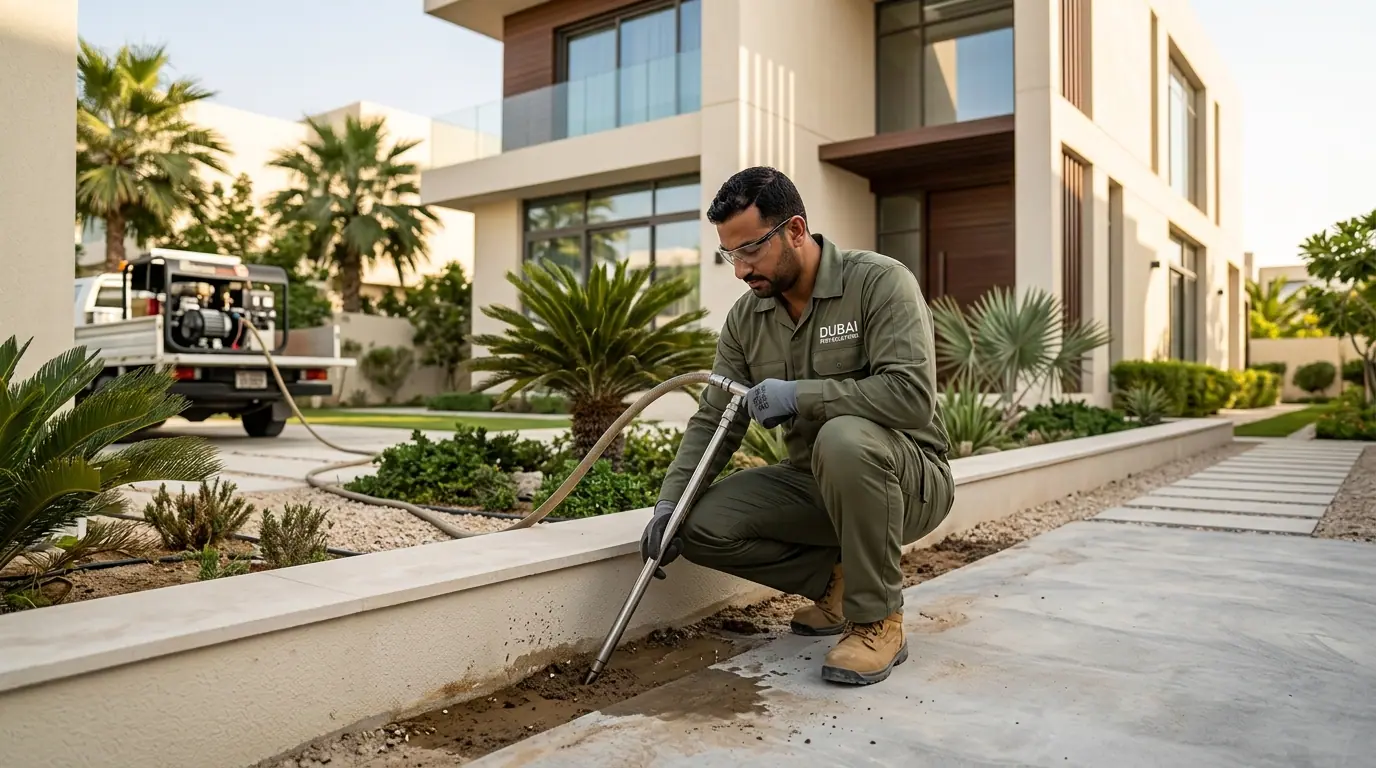
Structural Diagnostics
Precision inspection of timber elements and hollow sound testing for termite activity
Long-Lasting Barriers
Soil-binding formulations applied to create a protective barrier around the structure
Minimal Defacement
Small drill holes sealed with grout close to the original color to keep the finish tidy
Follow-Up After Treatment
Inspection and follow-up visits can be arranged depending on the case and treatment type, with the scope explained upfront
Biology of Subterranean Termites (Al Ramah) in the UAE
Known regionally across the United Arab Emirates and Arabian Gulf as "Al Ramah", subterranean termites are eusocial insects living in massive underground colonies numbering hundreds of thousands of individuals beneath foundation soil. These destructive insects feed exclusively on cellulose found in structural timber, wooden door frames, interior gypsum wallboard paper backing, kitchen cabinetry, and stored cardboard cartons. What makes subterranean termites a devastating structural hazard is their cryptic feeding behavior: they consume timber from the inside out, leaving the outermost surface or paint skin apparently intact while the structural core is hollowed out before any warning signs are noticed.
Termites are not true ants; they belong to an entirely different biological order requiring specialized subterranean chemistry rather than surface ant sprays
Insects migrate upward from foundation subsoils through hairline concrete cracks and unsealed expansion joints
Termites construct protective earthen mud tubes along concrete walls to shield their soft, moisture-dependent cuticles from ambient heat and desiccation
Spraying surface insecticide on infested wood rarely controls the colony, as the reproductive queen remains protected deep within the subterranean soil
Core Termite Management Protocols Offered by Nojoom Al Azm
We categorize termite management into two distinct architectural intervention phases:
Pre-Construction Soil Chemical Barrier
High-volume chemical saturation applied across compacted foundation soil, column footings, and plumbing stubs before vapor barrier installation and concrete pouring, creating a protective perimeter.
Post-Construction Slab Pressure Injection
Precision micro-drilling along perimeter walls, expansion joints, and door thresholds, followed by high-pressure hydraulic chemical injection to re-establish the subterranean protective barrier beneath existing tiles.
Localized Door Jamb & Millwork Injection
Targeted void micro-injection directly into affected wooden door frames and baseboards, targeting isolated feeding activity and helping limit migration into adjoining rooms.
Want us to price this for you now?
Send us the size and location and we will reply with a clear quote before any commitment.
Observable Indicators of Active Subterranean Termite Ingress
Early detection protects structural integrity; watch for these critical diagnostic markers:
1Earthen Mud Shelter Tubes Along Walls (Mud Tubes)
Narrow, brown, earth-colored tunnels extending vertically up concrete walls, behind large furniture, or adjacent to door frames, built to maintain humidity during transit.
2Hollow, Resonant Sounds When Tapping Wooden Door Frames
Tapping wooden door jamb bases with the handle of a screwdriver produces an empty, papery hollow sound, revealing internal structural consumption.
3Bubbling, Blistered Paint Resembling Moisture Damage
Paint on wooden door trim or baseboards may appear rippled, blistered, or discolored due to internal hollowing and moisture carried by workers.
4Structural Crushing Under Light Finger Pressure
Outer veneer layers of door jambs easily puncturing or collapsing under gentle thumb pressure, exposing internal honeycombed galleries packed with fine soil.
5Discarded Transparent Wings Near Window Sills (Swarmers)
During seasonal reproductive nuptial flights (spring and autumn), winged alates emerge, mate, shed their delicate equal-sized wings, and attempt to establish new colonies.
Vulnerable Ingress Thresholds Across Residential Villas
Our technicians concentrate diagnostics on critical structural contact points between soil and timber:
Wooden Door Frame Bases Contacting Concrete Slabs
The primary ingress threshold where termites cross unsealed grout lines to access wooden jambs directly.
Concrete Expansion Joints & Hairline Slab Cracks
Cold joints separating concrete pours provide direct, unhindered pathways from sub-base soil into flooring.
Under-Sink Kitchen Cabinetry Attached to Perimeter Walls
Persistent moisture from plumbing runs combines with composite wood to create an ideal sustained feeding habitat.
Gypsum Wallboard Paper Facings Near Ground Level
High-cellulose paper liners on drywall sheets serve as nutritious foraging conduits across wall cavities.
Perimeter Garden Landscaping & Decaying Tree Stumps
Outdoor wood mulch and old roots adjacent to villa perimeter foundations provide external colony breeding reservoirs.
Why Superficial Spraying & Self-Treatments Often Fall Short
Attempting to treat termites with consumer aerosols or diesel fuel can worsen structural damage:
Subterranean Colony Depth & Queen Isolation
The reproductive queen resides deep underground, producing thousands of eggs daily. Killing a few visible workers in a door frame affects only a tiny fraction of the colony, leaving the nest largely unaffected.
Repellent Chemistry Triggers Foraging Diversion
Standard consumer bug sprays emit harsh odors that repel termites, causing the colony to seal off the treated tunnel and construct new foraging paths toward adjacent rooms.
Requirement for High-Pressure Hydraulic Injection
Rebuilding an underground chemical barrier beneath a finished floor requires pressure injection equipment to treat sub-slab soils more uniformly, which is difficult with hand sprayers.
Lack of Non-Repellent Transfer Chemistry
Professional treatments use non-repellent active ingredients that foragers carry back into the subterranean nest, where they can spread through grooming behavior.
Our Structured Termite Protection Protocol
A systematic intervention designed to establish a continuous protective subterranean barrier:
Structural Diagnostic Survey & Sonic Sounding
Technicians inspect all wooden frames, baseboards, and foundation perimeters using acoustic probes to identify internal gallery hollows and active mud conduits.
Precision Diamond Micro-Drilling (8-10 mm)
Drilling small holes at planned intervals along door frames, expansion joints, and perimeter floor tile grout lines.
Controlled Hydraulic Soil Pressure Injection
Injecting non-repellent termiticide beneath the concrete slab under controlled pressure, per label instructions, to form a continuous subterranean protective barrier.
Targeted Door Frame & Millwork Void Injections
Treating internal cavities within affected wooden jambs directly, targeting isolated pockets of workers while treating hollow channels.
Color-Matched Aesthetic Hole Restoration
Following injection, all micro-holes are sealed using tile grout or structural compound close to the color of the existing floors.
Treatment Report & Follow-Up Planning
Delivering a treatment report detailing the treated perimeter and products applied, with follow-up inspections arranged depending on the case.
Property Preparation Guidelines Prior to Termite Treatment
Simple steps that help the team carry out drilling and hydraulic injection efficiently:
- Clear a one-meter corridor around affected wooden door frames and perimeter walls by shifting furniture.
- Roll back loose rugs or runner carpets covering tile grout lines along corridors and entrance thresholds.
- Provide access to domestic water supply and an electrical outlet to power hydraulic injection pumps.
- Inform the technical team of any underfloor heating conduits or plumbing pipe routings embedded beneath floor tiles.
- Keep any collapsed wood debris or mud tubes intact for technician inspection prior to the start of work.
Post-Treatment Guidelines to Preserve Barrier Integrity
Recommendations that help maintain the protective barrier:
- Avoid drilling, trenching, or cutting through treated floor grout lines and perimeter foundation slabs.
- Repair exterior plumbing leaks and landscape irrigation heads that spray water directly against foundation walls.
- Do not store scrap lumber, cardboard cartons, or wood mulch against exterior villa foundation walls.
- If installing new replacement wooden doors, request a localized pre-installation dip or treatment on the new frames.
- Keep your treatment report and contact Nojoom Al Azm to arrange follow-up inspections where agreed or needed.
A question before you book?
Message us on WhatsApp with your situation and we will suggest the best option, no obligation.
Termite Management Across Varied Structural Typologies
Tailored chemical and mechanical barrier solutions for construction and residential assets:
High-volume soil saturation applied across compacted earth prior to vapor barrier placement and structural slab casting, creating a continuous subterranean barrier.
Interior and exterior perimeter micro-drilling and pressure injection with color-matched grout sealing, focusing on door jambs and plumbing risers.
Perimeter chemical barriers combined with pallet storage inspections and moisture control auditing across expansive concrete slabs.
Hydraulic Pressure Injection vs Surface Spraying
| Technical Criteria | Nojoom Al Azm Hydraulic Injection | Surface Spraying & Self-Treatment |
|---|---|---|
| Targeting Subterranean Origin | Sub-slab hydraulic pressure injection treating the soil, aiming to reach and reduce the underground nest | Spraying liquid on door surfaces, which may not reach the subterranean breeding soil |
| Formulation Chemistry | Non-repellent transfer chemistry carried by foragers into the nest, aiming to reach the queen | Some repellent sprays may cause termites to divert toward untreated timber |
| Flooring Aesthetic Preservation | Micro-drilling in grout lines sealed with grout close to the original color, with minimal visual impact | Non-professional methods can crack tiles or leave stains and odors when fuels are used |
| Follow-Up After Service | A treatment report and follow-up inspections arranged depending on the case and agreement | Technical follow-up and written records of the work are usually not available |
Key Factors Governing Termite Treatment Pricing
Nojoom Al Azm prices termite protection transparently based on technical scope:
Property Linear Perimeter & Square Meterage
Determines the total volume of specialized non-repellent termiticide required to saturate sub-base soils.
Number of Door Frames & Ingress Points
Treating a single door jamb requires less labor than a comprehensive villa injection involving dozens of frames.
Project Stage (Pre-Construction vs Existing Villa)
Pre-construction spraying involves direct earth saturation, whereas existing villas require diamond drilling and hydraulic injection.
Follow-Up & Verification Inspection Scope
Follow-up inspections can be agreed depending on the treatment type and case; if new activity appears, we review results with you and decide on the right next step.
Indicative Pricing Estimate
Targeted door frame treatments start from clear baseline fees, with comprehensive villa protection priced per linear or square meter following inspection.
Each quote from Nojoom Al Azm explains what is included, such as inspection, drilling, materials, restoration, and any agreed follow-up visits, with no hidden fees.
Practical Habits to Protect Your Villa Against Termites
Maintain Clearance Between Timber & Soil
Ensure wooden garden trellises, steps, and decorative timber do not make direct, uninsulated contact with soil.
Divert Landscape Irrigation Away from Foundations
Adjust sprinkler heads so they do not saturate exterior villa walls; damp sub-soil can attract Al Ramah.
Inspect Ground-Floor Door Jambs Periodically
Tap the base of wooden door frames every few months to verify sound timber density and check for fragile mud tunnels.
Specify Pre-Treatment for Parquet Flooring
Consider treating concrete sub-floors with protective formulations prior to laying natural hardwood or luxury parquet flooring.
Protect Your Architectural Investment from Termite Damage
Schedule an on-site structural diagnostic survey from our trained technicians to receive a clear assessment and transparent quotation.
Everything you need to know about this service
Not necessarily. Wood can experience dry rot from water leaks or fungal decay. Subterranean termites are distinguished by hollowed-out timber filled with fine soil deposits and accompanied by external mud tubes. Our technicians conduct precision diagnostics to confirm the exact cause before proposing treatment.
We take care to avoid this. We use specialized diamond-tipped rotary drills designed for hard stone and porcelain, drilling small holes of about 8-10 mm along existing tile grout lines. Following injection, holes are sealed with grout close to the original color, which usually makes them hard to notice. Details can be agreed upfront depending on the flooring type.
Follow-up depends on the treatment type and the property. Follow-up inspections can be arranged after pre-construction soil treatment or post-construction villa injection. If you notice any new activity, contact us so we can review the results with you and decide whether a further inspection or supplemental treatment is needed. We explain upfront what the agreement includes.
Yes. Although colonies reside underground, termites travel through expansion joints, plumbing chases, and electrical conduit voids within concrete slabs, reaching first-floor door jambs, decorative gypsum ceilings, and roof timber if not limited by a chemical barrier.
The suitable window is following final subgrade compaction and before vapor barrier installation and concrete slab pouring (Slab on Grade). The soil is treated per product label instructions, and the concrete is then poured within the timeframe set by the technician and the site contractor to help protect the soil barrier.
Related Pest Management Services
UAE Pest Control Services Hub
Overview of residential and commercial pest management
Targeted Cockroach Control Services
Specialized gel bait matrices for German and American cockroaches
Urban Rodent & Rat Management
Tamper-resistant bait containment and physical exclusion proofing
Post-Construction Deep Cleaning
Turnkey debris extraction and deep detailing for newly completed projects
Post-Construction Detailing & Anti-Termite Protection
When handing over a newly constructed or renovated property, professional post-construction cleaning removes fine drywall dust and masonry residues, complementing structural termite protection. Explore our post-construction cleaning services.
This service in UAE cities
Dedicated pages for each city, explaining the service for the local property types and climate.