Commercial & Residential Fly Control Services in the UAE
A multi-tier scientific IPM protocol targeting fly breeding sources: bio-enzymatic foam digestion of drain biofilm, glue-board insect light traps that limit fragmentation, and residual exterior treatment.
- Active bio-enzymatic foam liquefying organic biofilm in floor drains to reduce drain fly larvae
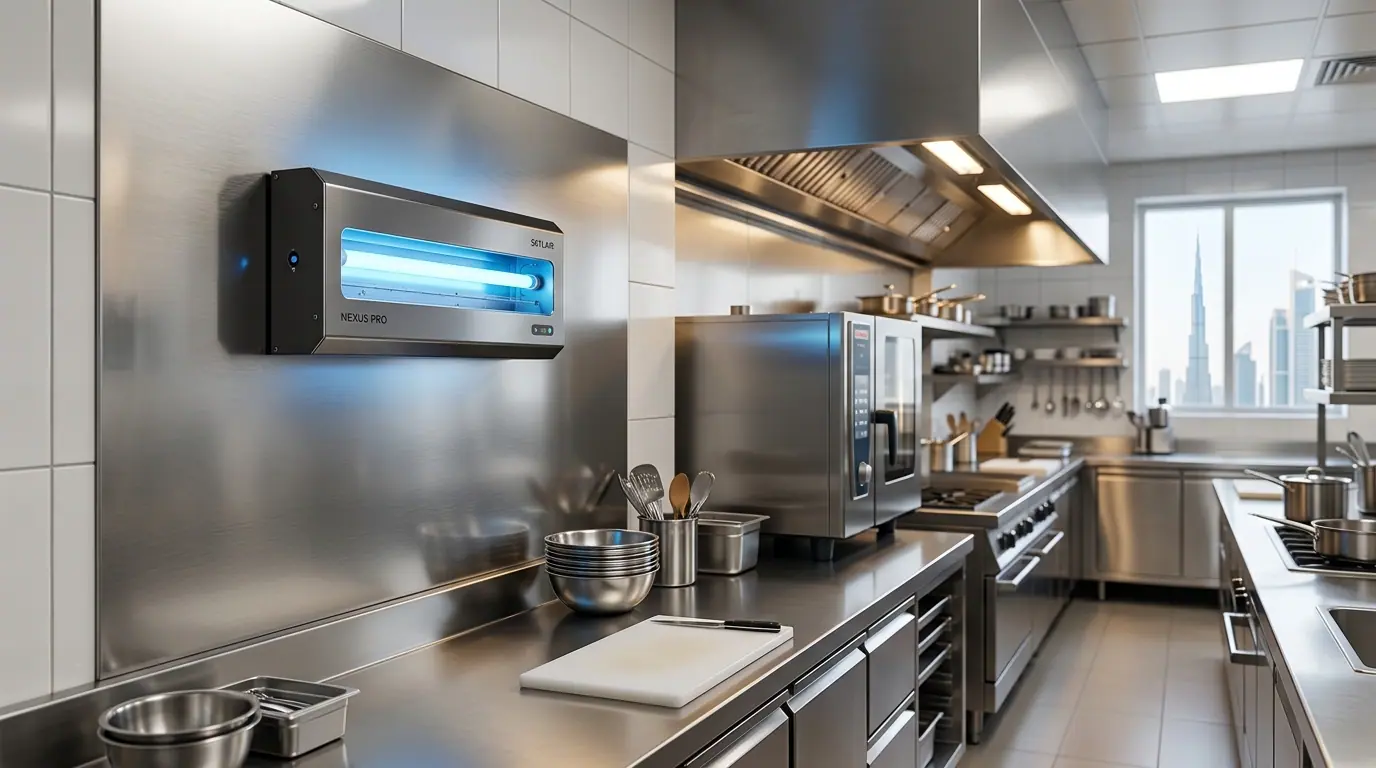
- Electronic glue-board Insect Light Traps (ILTs) that limit flying insect fragmentation in kitchens
- Pheromone attractants and residual barrier treatments for commercial trash compactors
- Protocols that take food hygiene and safety guidance into account for restaurants and homes across the UAE
Food Safety Awareness
Glue-board traps that limit fragment contamination
Biofilm Enzymatic Digestion
Biological foam targeting subsurface drain larvae
Exterior Pheromone Barriers
Helping intercept flies before they enter buildings
Service Logbooks
Pest control logbook with catch-rate records for commercial sites
Fly Biology in the UAE Climate & Food Hygiene Risks
Flies in the United Arab Emirates are a public health concern and a business risk for commercial food enterprises and private villas. Due to high ambient temperatures and elevated humidity cycles, flies develop rapidly; a housefly can complete its development cycle from egg to adult in about a week or less in warm conditions. The problem with flies goes beyond customer annoyance in dining rooms or domestic disturbance in villas. Flies feed indiscriminately across decaying refuse, grease traps, raw animal feces, and municipal sewers before landing on unshielded food preparation counters. Because flies lack chewing mouthparts, they must liquefy solid sustenance by regurgitating digestive stomach enzymes and saliva directly onto food before ingestion, often defecating when they land. A housefly can carry many pathogenic microorganisms, including Salmonella, Escherichia coli (E. coli), and Shigella. Effective commercial fly control calls for an engineering and biological approach that addresses organic breeding substrates at the source, rather than electric zappers that can fragment insects and scatter pathogens near food preparation areas.
Houseflies (Musca domestica): Proliferate in garbage disposal chutes, outdoor waste skips, and fermenting organics, which can carry enteric pathogens.
Drain & Moth Flies (Psychodidae): Distinctive fuzzy, moth-like micro-flies breeding within the decaying gelatinous biofilm coating kitchen floor waste pipes.
Fruit & Vinegar Flies (Drosophila melanogaster): Swarm around ripening fruits, cocktail syrup stations, and damp draft beer drains in restaurants and cafes.
Stable Flies (Stomoxys calcitrans): Aggressive blood-feeding flies infesting equestrian clubs and country farms in Al Ain and Sharjah, biting equine livestock and causing stress.
Prevalent UAE Fly Species & Their Target Environments
Species identification determines the chemical, mechanical, and bio-enzymatic protocol
Drain & Sewage Flies in Commercial Pantries
Small, moth-like flyers hovering persistently above floor waste gullies, grease interceptors, and dishwashing drains, feeding on thick greasy biofilm.
Houseflies in Central Waste Chutes
Large flyers congregating in skyscraper trash chute collection rooms and residential perimeter bins, penetrating interior spaces via service elevators and doors.
Fruit Flies in Juice Bars & Fine Dining
Microscopic swarms infesting bar stations, fruit crates, and espresso drip trays, which can affect food safety and the reputation of the venue.
Biting Stable Flies in Equestrian Facilities
Painful blood-feeding pests proliferating in equine dung and damp straw bedding, bothering horses and groundskeepers across rural UAE estates.
Want us to price this for you now?
Send us the size and location and we will reply with a clear quote before any commitment.
Indicators of an Established Fly Breeding Source
How to detect hidden organic breeding reservoirs before populations grow
1Moth-Like Insects Emerging from Floor Drain Grates
Observing weak, clumsy flyers crawling out of shower drains, sink overflows, or commercial gully traps during quiet morning hours.
2Fly Specks on Overhead Lighting & Walls (Fecal & Salivary Drops)
Noticing small, dark clustering dots across suspended lamps, window sills, and kitchen wall tiles—telltale biological deposits left by resting adult flies.
3Active Maggot Development in Waste Receptacles
Discovering crawling, creamy-white larvae squirming at the bottom of outdoor garbage cans or beneath bin liners in utility yards.
4Clusters Hovering Around Air Curtain Thresholds
Flies loitering around sliding glass entryways, exploiting eddy currents and misaligned air velocity to slip inside with every customer entry.
High-Risk Harborage & Breeding Sources Across UAE Buildings
Critical inspection zones prioritized by our technicians
Organic Biofilm Inside Floor Waste Traps & Drain Lines
Gelatinous accumulation of decomposing grease, food sediment, and detergent scum providing food and shelter for drain fly larvae and pupae.
Central Trash Chutes & Underground Waste Compactors
Rotting food residues adhering to internal chute walls and unwashed collection dumpsters across multi-story developments.
Under & Behind Heavy Commercial Kitchen Equipment
Unreachable gaps beneath blast chillers, deep fryers, and prep tables holding damp organic grease sludge.
Air Conditioning Evaporator Trays & Sump Wells
Warm condensate water enriched with airborne organic particulate matter nurturing opportunistic fly breeding.
Raw Animal Manure & Excessive Garden Organic Fertilizer
Unfermented animal manure used on villa turf can quickly attract many exterior houseflies and blowflies.
Why Electric Grid Zappers & Chemical Sprays Often Fall Short
The hygiene concerns and biological limitations of consumer tactics
Insect Fragmentation & Airborne Contamination
High-voltage electric zappers can disintegrate the fly upon impact, scattering microscopic body fragments, hairs, and bacteria into the surrounding air, which may reach exposed food and food contact surfaces; they are best avoided near food preparation areas.
Limited Effect of Bleach & Hot Water on Drain Biofilm
Household bleach washes past the protective mucus shield of the biofilm without dissolving the core, which can allow larvae deep in plumbing bends to survive.
Lack of Residual Longevity in Airborne Aerosol Sprays
Space sprays mainly affect flying adults present in the airspace, and often miss pupae and eggs secluded in drains and trash compactors.
Ignoring Mechanical Air Barrier Dynamics
Failing to service air curtains or align entrance thresholds can allow new flies to keep entering as fast as indoor adults are removed.
Our 6-Step Integrated Fly Management Protocol (IPM)
A holistic hygiene strategy integrating bio-enzymatic digestion, glue-board ILTs, and exterior interceptors
Sanitary Inspection & Biofilm Mapping
Thorough review of all drain runs, floor junctions, compactor rooms, and grease interceptors to identify species-specific breeding epicenters.
Bio-Enzymatic Drain Foaming (Bio-Digestion)
Injecting high-expansion biological foam loaded with natural bacterial enzymes that cling to vertical plumbing walls, digesting the gelatinous biofilm layer.
Glue-Board Light Trap Deployment (ILTs)
Installing commercial insect light traps using suitable UV-A light frequencies to draw flies onto hidden adhesive glue boards quietly, with minimal odor and carcass scatter.
Pheromone Baiting & Exterior Perimeter Barrier
Deploying targeted granular attractants and long-residual micro-encapsulated barrier formulations to exterior dumpster enclosures and compactor bays.
Mechanical Exclusion & Air Curtain Adjustment
Inspecting automatic door closers, installing heavy-duty rubber threshold gaskets, and checking air curtain discharge velocity so it forms an effective airflow barrier.
Catch-Rate Review, Board Replacement & Service Logbooks
Visits agreed with you to replace saturated glue boards, log fly species counts, and update the service logbook for your facility management.
Preparation Guidelines Prior to Professional Fly Treatment
Simple operational steps that help enzymatic and barrier applications go smoothly
- Empty and thoroughly rinse all indoor trash cans and waste bins prior to technician arrival.
- Refrain from running hot water or pouring chemical detergents down floor drains before foaming, for the period your technician advises.
- Cover or stow away all open food ingredients, cut fruits, and clean dinnerware in sealed cupboards.
- Ensure technicians have clear, unobstructed access to commercial floor drains, grease traps, and central waste chutes.
- Brief commercial kitchen staff on the service timeline to avoid scheduling conflicts during peak prep times.
Post-Treatment Sanitary Guidelines to Help Maintain Results
Maintaining an unwelcoming environment for flying pests
- Avoid flushing boiling water or harsh caustics down treated drains for the period your technician advises, to let bio-enzymes digest the biofilm.
- Keep insect light traps powered on around the clock; flies frequently forage during low-light nighttime periods.
- Wash outdoor dumpsters regularly with degreasing agents and keep lids firmly closed at all times.
- Maintain automatic door closers and confirm air curtains blow outward with sufficient velocity whenever doors open.
- Coordinate with our technical desk to schedule glue-board replacements and UV lamp output checks.
A question before you book?
Message us on WhatsApp with your situation and we will suggest the best option, no obligation.
Customized Fly Control Across Commercial & Residential Sectors
Programs tailored to operational needs and food hygiene guidance
A protocol that takes food safety guidance and facility requirements into account; quiet glue-board ILTs, bio-enzymatic drain foaming, and no airborne chemical applications around preparation lines.
Bio-enzymatic treatment of drain flies in guest suites, pheromone interception around external bin stores, and sun-resistant barrier treatments on outdoor barbecue pergolas.
Intensive stable fly reduction; biological manure treatment with insect growth regulators (IGRs), paired with large exterior pheromone bag traps along paddock perimeters.
Systematic bio-foaming of multi-story garbage chutes, dumpster compactor treatment, and high-velocity air curtain installation at loading bay delivery docks.
Comparison: Nojoom Al Azm vs Electric Zappers & One-Off Treatments
| Technical Dimension | Nojoom Al Azm IPM Protocol | Electric Zappers & One-Off Treatments |
|---|---|---|
| Food Safety Considerations | Glue-board ILTs that trap whole insects quietly and limit fragment scatter. | Electric grid zappers can fragment flies and scatter bacteria near food counters. |
| Drain Fly Larval Remediation | Bio-enzymatic foam digesting the protective organic biofilm along the pipe wall. | Pouring bleach or boiling water may wash over the slime without reaching larvae. |
| UV Attraction Technology | UV-A lamps with wavelengths suited to attracting flies. | Some generic blue fluorescent tubes have weak output that may not attract flies well. |
| Records & Reporting | Regular trend reports and a service logbook to support your own facility records. | Inspection records and technical documentation are often not available. |
Transparent Pricing Factors for UAE Fly Control Services
Clear commercial terms based on drain counts, ILT hardware requirements, and audit frequency
Number of Floor Drains & Grease Traps
Large industrial kitchens with extensive trench drains may require larger quantities of specialized bio-enzymatic foam.
Insect Light Trap Hardware
Purchase or leasing options for commercial glue-board ILT units, plus scheduled replacement cycles for UV tubes and boards.
External Waste Compactor & Dumpster Footprint
High-volume commercial garbage yards may require periodic micro-encapsulated wall applications and pheromone baiting.
Contract Structure (One-Off Remediation vs. Annual Service Agreement)
Annual commercial maintenance contracts can include regular logbook entries and trend analysis, with terms agreed in advance.
Indicative Pricing Estimate
Pricing is confirmed after inspection based on drain counts and trap requirements; commercial contracts are set according to the agreed inspection and maintenance scope.
Each quote explains what is included, such as drain bio-foaming, waste yard treatments, trap placements, and the service logbook.
Sanitary Habits to Help Prevent Fly Problems
Weekly Bio-Degreasing of Floor Drains
Scrub kitchen and bathroom floor waste gullies with long-handled brushes and biological degreasers to prevent slime build-up.
Immediate Daily Disposal of Organic Waste
Never leave unsealed garbage bags inside overnight; rinse out trash cans weekly and keep outdoor lids firmly sealed.
Refrigerate Ripening Produce
Fruit flies can detect fermentation odors from a distance; store soft fruits and open condiments inside refrigerators.
Maintain Air Curtains & Door Threshold Gaskets
Confirm exterior entrance air curtains operate smoothly and replace worn door sweeps to close lower threshold gaps.
Protect Your Brand Reputation & Customer Comfort from Flying Pests
Tackle stubborn drain flies and commercial houseflies with scientific bio-enzymatic foam treatments and quiet glue-board light traps.
Everything you need to know about this service
Electric zappers with high-voltage metal grids can fragment the insect on contact. This can scatter microscopic body fragments, wing scales, and bacteria (such as Salmonella) into the surrounding air, which may reach exposed food and food prep surfaces. For this reason, glue-board insect light traps that limit fragmentation are generally preferred in food environments, in line with common food hygiene guidance.
Drain fly larvae inhabit and feed upon the decaying "biofilm"—a thick layer of gelatinous grease, soap scum, and organic sediment clinging to plumbing walls. Standard chemical cleaners simply wash over this slime. Our specialized bio-enzymatic foam expands to fill the pipe diameter, clinging to the walls for some time while natural bacterial cultures digest the organic matrix, reducing the larvae food supply and breeding sanctuary.
Our commercial ILT units generally operate quietly, without zapping noise or burning smells. The glue board is concealed within a modern housing that hides trapped flies from the view of dining guests, making them well suited to hospitality venues.
No. Household aerosol sprays provide temporary knockdown of the few adult flies airborne at that moment, but they do nothing to address the thousands of eggs, larvae, and pupae developing inside floor drains, trash compactors, or under kitchen equipment. Without bio-enzymatic sanitation and structural exclusion, fresh flies can keep emerging.
Glue boards should be inspected and replaced regularly, or sooner once they are heavily covered with insects or kitchen dust. UV-A tubes are typically replaced about once a year, following the manufacturer's recommendation; a lamp may continue to emit blue light after a year while its invisible ultraviolet output declines, reducing its ability to attract flies.
We implement an integrated program: specialized bio-enzymatic foaming to degrease internal chute walls, granular pheromone attractants in compactor bays, and long-residual micro-encapsulated perimeter barriers applied to masonry walls to target flies upon landing.
Yes. We provide commercial clients with a Pest Management Logbook that records service details, products used, trap maps, and catch-rate trend reports. Requirements set by regulators vary by facility, so we recommend confirming them with the relevant authority for your premises.
Our bio-enzymatic formulas contain natural bacterial enzymes and are not acid-based or caustic products. They are designed for use in drain lines per label instructions, and we recommend telling your technician about your pipe materials beforehand.
Related Pest Management Services
Professional Mosquito Control Services
Flies and mosquitoes both flourish during pleasant UAE weather; both treatments can be coordinated depending on the case.
Commercial Kitchen Cockroach Control
Neglected floor drains attract both drain flies and German cockroaches; both can be addressed together depending on the case.
UAE Pest Control Services Directory
Explore our range of pest control services across the UAE.
Commercial Kitchen Deep Degreasing & Hood Cleaning
Heavy grease deposits behind commercial ranges and inside exhaust hoods serve as primary attractants for flies. Pair your fly IPM program with our commercial deep degreasing service to help maintain a cleaner kitchen environment.
This service in UAE cities
Dedicated pages for each city, explaining the service for the local property types and climate.