Post Construction Cleaning Services in Dubai for Villas, Flats and Offices
The contractor has finished and taken the equipment away, yet a white film still covers every surface. We send a crew to your Dubai site to see what the works left behind and to set clear stages of work before the real visit begins.
- Removal of cement and plaster dust from surfaces, cabinets and vents
- Treatment of paint spots, silicone smears, tape and sticker residue
- Final cleaning before handover once protective covers come off
- Work that respects fit-out rules in towers and communities, including contractor permits
Site inspection first
We see how much dust there is and which surfaces are involved before setting stages, because a flat fit-out is not a full villa.
Clear stages
We separate the rough clean, the final clean and the touch-up walk so each party knows what happens and when.
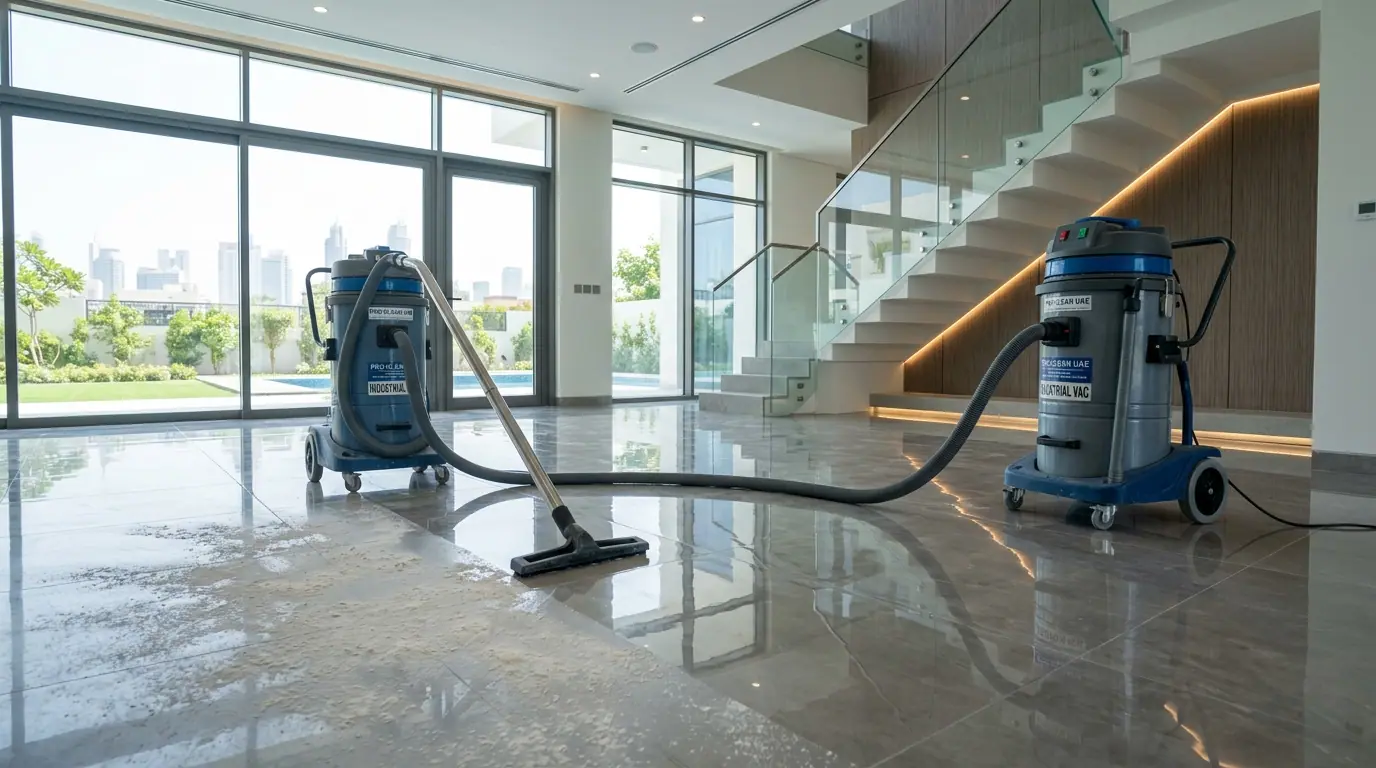
Equipment for fine dust
We use fine-filter vacuums and tools that will not scratch new surfaces, and we follow product labels.
Review with the project owner
We walk the unit with you or your representative and fix what can be fixed before the crew leaves.
Why post-construction cleaning is its own job in Dubai
Building never really stops in Dubai. Villas are renovated in Jumeirah, Umm Suqeim and Al Barsha, flats are handed over by developers in Business Bay and Downtown, offices are fitted out in towers, and showrooms open in Al Quoz. In every one of these projects a moment comes when the contractor leaves and the site stays under a fine layer that an ordinary vacuum cannot lift. That is why owners look for post construction cleaning services in Dubai that know how to deal with it.
Cement and plaster dust is extremely fine. It slips into air-conditioning vents, window grooves, built-in cabinets and door hinges, and it reappears after the first wipe if it was not vacuumed first. On top of it you find paint spatter on glass, surplus silicone around basins, manufacturer stickers glued to doors and mirrors, and plastic sheeting still stuck to floors and windows.
Because summer heat speeds up drying, mortar and paint can harden into a crust when they are ignored, and humidity makes them cling harder. Sequencing helps: heavy dust first, then stains, then the final clean after every trade has finished, so dust never returns to a space we have already cleaned.
Who asks for this service in Dubai
A villa owner who has finished renovating
After new floors, repainted walls or a replaced kitchen, they want a home fit to live in rather than a dusty project.
A buyer collecting a new flat from the developer
They want cleaning before furniture goes in, and a clear view of what needs to be raised as a snag with the developer.
A fit-out contractor
They need a crew to clean the site before it is handed to the client, with a clear scope and dates that fit the project schedule.
A company preparing an office or showroom
They need clean space before furniture, equipment and visitors arrive, on a schedule that follows building or community rules.
What fit-out work leaves behind
These are the problems we usually start with when we inspect a finished site:
Fine cement and plaster dust inside cabinets, on ceilings and in vents
We vacuum it with fine-filter machines from top to bottom before any wet wiping, so it does not turn into a paste that sticks to surfaces.
Paint spatter on glass, frames and floors
We soften the spot with a suitable cleaner and lift it with a plastic scraper or glass blade where the surface allows, testing a small area first.
Excess silicone and adhesive around basins and glass
We remove the surplus carefully without cutting through the installed bead. If the bead itself is faulty, repairing it is the contractor’s job.
A white haze on tile and marble after grouting
We treat it with a product suited to the tile type, and avoid strong acids on marble and other sensitive stone.
Plastic covers, tape and sticker glue on doors and windows
We remove them once the trades are done and clear the glue. Taking them off early can expose the surface to damage from later work.
Want us to price this for you now?
Send us the size and location and we will reply with a clear quote before any commitment.
Scope of work on finished projects
We adapt the list to the project type, whether a villa, a flat, an office or a showroom:
Rough clean after the heavy work
- Light debris, bags and packaging gathered in a place the client chooses, without hauling heavy rubble.
- Ceilings, walls, vents and high shelves vacuumed.
- Floors vacuumed, with corners and door thresholds cleaned.
- Protective covers that are no longer needed removed in coordination with the contractor.
New kitchens and bathrooms
- Cabinets cleaned inside and out, with dust removed from hinges and drawers.
- Grout haze and mortar traces taken off tile, basins and sanitary ware.
- Built-in appliances wiped and stickers with their glue removed.
- Glass, mirrors and shower screens cleaned.
Rooms, floors and glass
- Doors, frames, switches and handles wiped.
- Windows cleaned inside, with paint spatter removed where possible.
- Floors cleaned with products suited to the type: porcelain, marble or wood.
- Stairs, handrails and entrances cleaned.
Final clean and handover touches
- A last pass after every trade has finished, to remove whatever dust has settled.
- Fingerprints and marks wiped from glossy surfaces and stainless steel.
- Balconies and nearby exterior surfaces cleaned where the building allows.
- A joint review with the client and a note of any open point.
Stages of the work
We divide the work so dust never returns to what we have cleaned:
Site inspection and information
We ask about the project type and condition and whether trades are still working, and check access rules, working hours, the lift, water and electricity.
A written plan with defined stages
We decide whether one visit is enough or a rough clean and a final clean are needed, then send the scope and the price in writing.
Vacuum from top to bottom
We vacuum ceilings, vents and cabinets, then walls and floors, because wet wiping before vacuuming turns dust into mud.
Treat stains and hard residue
We deal with paint, silicone, mortar and stickers using tools that will not scratch, testing every product on a small area first.
Wet cleaning and polishing
We wipe surfaces, floors and glass with products suited to each, then dry them to avoid streaks and marks.
Handover walk-through
We review the unit with you and correct what we can before leaving, and we point out any workmanship defect that needs the contractor.
Tools and methods
We choose tools suited to fine dust and new surfaces, and we follow the label on each product.
Fine-filter vacuums
Capture cement and plaster dust without blowing it back into the air.
Plastic scrapers and glass blades
Lift paint, silicone and dried mortar from hard surfaces.
Cleaners made for grout haze and limescale
Treat the white film on tile and sanitary ware.
Microfiber cloths and soft brushes
Wipe glossy surfaces, cabinets and appliances without leaving streaks.
Rough clean or final clean?
Large projects may need both, while small ones can manage with the final clean alone:
| Point of comparison | Rough clean | Final clean |
|---|---|---|
| Timing | After the heavy work, possibly before every trade has finished | After every trade and installation is complete |
| Goal | Remove heavy dust and light debris | Prepare the unit for handover or occupancy |
| Focus | Vacuuming, ceilings, floors and corners | Glass, sanitary ware, fingerprints and glossy surfaces |
| Risk of dust returning | High if other work continues | Low, because the work is over |
The project type shapes the plan
Fit-out projects in Dubai vary, and each type needs a different sequence:
Renovated villas in Jumeirah, Umm Suqeim, Al Warqa and Mirdif
Large areas with floors, stairs and many bathrooms, sometimes with a garden and a driveway.
Agree whether annexes and outdoor entrances are in scope, and plan a rough clean followed by a final clean.
New flats in Business Bay, Downtown and Marina
Plenty of glass, polished floors, built-in kitchens and the developer’s snagging points.
Clean before logging snags so real defects stand out, and check the building’s rules on entry.
Offices in towers and commercial complexes
Raised floors, suspended ceilings, shelving and office furniture arriving on site, plus contractor access rules.
Coordinate working hours with management and book the lift ahead of the appointment.
A question before you book?
Message us on WhatsApp with your situation and we will suggest the best option, no obligation.
What shapes the quote
We do not name a figure before inspecting the site, and the offer depends on:
Site area and number of floors
A three-floor villa needs a larger crew and more time than a small flat.
How heavy the dust is and how long it has sat
Dust left for weeks in humid summer hardens and takes more effort.
Surface types
Marble, glass and stainless steel need more careful methods than standard tile.
Amount of hard residue
Paint, silicone and dried mortar add time.
Number of cleaning stages
Two stages mean two visits and scheduling between them.
Clear pricing
Send the project type, area and a few photos on WhatsApp, and we will reply with a written scope and price.
New surfaces need care
New surfaces scratch easily, so we test each method on a small spot first:
Marble and natural stone
A neutral cleaner and soft cloths, with no acids.
We do not promise to remove what has soaked into the pores of the stone.
Glass and mirrors
Vacuum the dust first, then use a glass blade where the surface allows.
No blades on treated or reflective glass.
New wood and parquet
A barely damp wipe followed by immediate drying.
We avoid heavy water that harms the joints.
What we need before the appointment
Coordinating with the contractor and management first saves everyone time:
- 1Confirm that every trade has finished, or tell us what remains, since dust returns with any new work.
- 2Provide water and electricity on site.
- 3Arrange the contractor entry pass and lift booking with management. This is the responsibility of the client, the contractor or management.
- 4Set aside a spot for our equipment and for light packaging waste.
- 5Tell us what must not be touched, such as surfaces still awaiting treatment or covers left in place on purpose.
- 6Let us know the permitted working hours and any noise limits.
After the final clean
Keep the unit clean until it is collected:
- Hold off any new installation work after the final clean unless the floor is covered.
- Keep balcony doors closed on dusty days.
- Replace the air-conditioning filters or have a technician clean them before occupancy.
- Open cabinets to air before putting items in them.
- Take photos of the unit after cleaning to record its condition.
What cleaning cannot fix
We state the limits before work starts:
- We do not haul heavy construction rubble or soil in truckloads. That falls to the contractor or a waste hauler.
- We do not repair workmanship defects such as faulty silicone, cracked grout or uneven paint.
- Some stains that have sunk into marble or polished concrete may not disappear completely.
- We do not clean or dismantle the inside of air-conditioning ducts, which is a job for a specialist technician.
- Cleaning scaffolding and high exterior facades needs special arrangements and is outside this service.
Common mistakes after fit-out
Avoid these for a cleaner result:
Dust returns and the visit has to be repeated.
Make the final clean the last step, after the electrician, joiner and painter.
Dust becomes mud and leaves streaks.
Start with the vacuum and move to wiping afterward.
Floors and windows get scratched by later work.
Keep them on until all trades finish, then remove them during the final clean.
Frequently asked questions
The rough clean removes heavy dust and light debris after the heavy work, possibly before every trade has finished. The final clean follows once everything is complete and prepares the unit for handover or occupancy. Large projects need both stages, and small ones may need only the final clean.
We gather light waste such as packaging bags and leftover covers in a spot the client chooses. Heavy rubble and bulk soil are handled by the contractor or a waste company that the client hires, and they are not part of post-construction cleaning.
We treat them with tools and products suited to each surface, testing a small area first. Glass and tile usually tolerate scraping, while delicate surfaces get more caution. If the defect is in the workmanship itself, such as a faulty silicone line, the contractor must correct it.
A rough clean is possible in that situation, but the final clean works best after every trade has finished, because any new work brings the dust back. Tell us what remains and we will suggest a suitable schedule, which may mean postponing the last stage.
Most buildings require contractor permits and lift bookings. The client, contractor or management arranges them, and we work within their conditions. Ask management early about requirements and permitted hours, and share them with us before the appointment.
It depends on area, number of floors, how heavy the dust is and the surface types. We give no duration before the inspection, and a large villa may need several days or two visits. We provide a clear estimate once we have seen the site and its real condition.
Yes. We clean cabinets inside and out, wipe built-in appliances and remove manufacturer stickers with their glue. Shelves need to be clear of building materials and tradesmen’s equipment so we can reach every corner.
We point it out during the handover walk-through, for example a scratch, an unfinished edge or faulty silicone. We do not repair workmanship, but seeing it early lets you ask the contractor to fix it before final acceptance.
Recommended Sister Services
Holistic packages ensuring complete hygiene across every aspect of your property.
Post-construction cleaning across the UAE
The parent page explaining the service in every emirate.
Cleaning services in Dubai
Every cleaning service available in the emirate.
Deep cleaning in Dubai
A follow-up after handover for a property that needs more care.
Window cleaning in Dubai
For glass marked by paint spatter and adhesive residue.
Office cleaning in Dubai
To prepare offices after fit-out and for regular cleaning later.
Move-in and move-out cleaning in Dubai
When you take over or hand back a unit around a move.
More in Dubai
- Apartment cleaning in Dubai
- Carpet cleaning in Dubai
- Curtain cleaning in Dubai
- Deep cleaning in Dubai
- Mattress cleaning in Dubai
- Move-in / move-out cleaning in Dubai
- Office cleaning in Dubai
- Sofa cleaning in Dubai
- Villa cleaning in Dubai
- Water tank cleaning in Dubai
- Window cleaning in Dubai
- Ant control in Dubai
Hand over your project clean
Send us the project location, type and stage of works, and we will arrange an inspection and a written offer with clear stages.