Water Tank Cleaning in Fujairah for Villas, Buildings and Farms
We inspect the tank inside and out, identify its type, size and condition, then drain, clean and rinse it in clear steps, with a written quote before work begins.
- Tank type, size and access checked first
- Sediment and slime removed from walls and base
- Thorough rinse before the tank is refilled
- Written quote showing what is and is not included
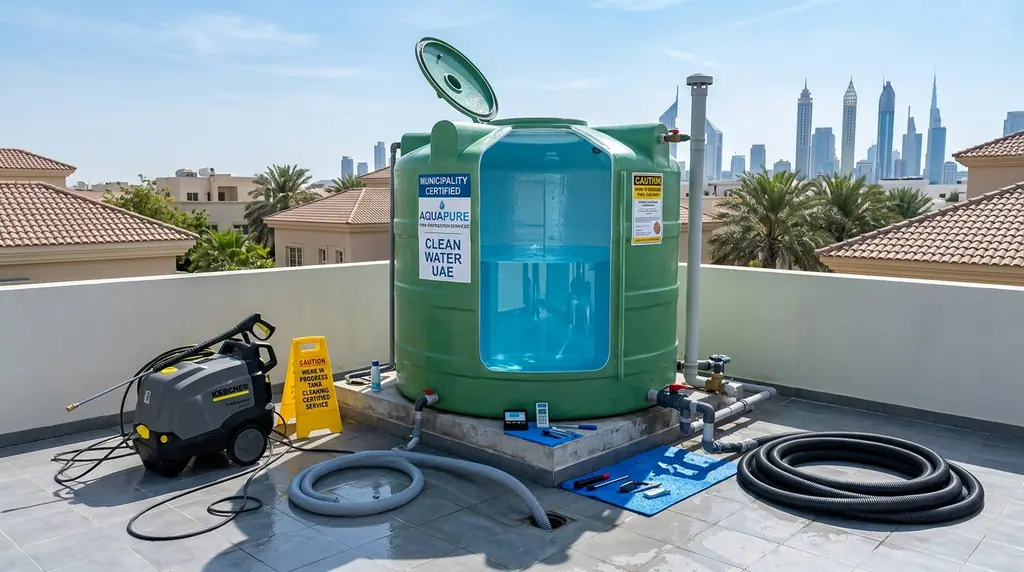
Why does a water tank need regular cleaning in Fujairah?
A water tank is easy to forget because it is out of sight, buried in the yard or sitting on the roof in the sun. Over time silt, fine sediment and mineral deposits settle at the bottom, coming from the supply itself or from older pipes, and a slimy film can form on the walls if the tank is exposed to heat and light or the lid does not seal well.
Conditions vary across Fujairah. Properties near the mountains and wadis can see more dust and soil getting in, homes close to the coast deal with humidity and rust on metal lids, and farms and rest houses often run large tanks that are used only occasionally. Each case needs an inspection before we choose a method.
We do not promise specific results and we do not claim to treat health conditions. What we provide is real cleaning of the tank, a note of what we found, and advice on avoiding a repeat. If we see signs of damage we tell you plainly and recommend a repair by a qualified contractor.
Tank types we work with
The method changes with the material, location and capacity of the tank.
Underground concrete tanks
Common in villas and traditional houses. We check the opening and lid, drain fully, clean walls and floor, and note any visible cracks.
Rooftop plastic tanks
Usually placed on the roof. We check the lid, the opening and sun damage on the outer surface, then drain and clean the inside.
Fibreglass tanks
Light and common in some buildings. We avoid sharp tools because scratches on the inner surface collect sediment.
Metal and stainless tanks
We watch weld condition and rust, use suitable products, and tell you if any parts need maintenance.
Building and apartment tanks
There may be several tanks and transfer pumps. We coordinate with the building manager to schedule the water cut with minimal disruption.
Farm and rest-house tanks
Often used seasonally, so sediment builds up or the water changes colour. We inspect before the system is brought back into use.
Want to know what your tank cleaning will cost?
Send the tank type, rough capacity and a photo of the opening, and we will reply with a written quote.
Signs your tank may need an inspection
One sign does not prove the tank is dirty, but each is a good reason to ask for an inspection:
- A change in water colour, or particles and sediment when you open a tap.
- An unusual smell from the water or when the tank lid is opened.
- A green or slimy layer on the inner walls when you look through the opening.
- Small filters and strainers that clog repeatedly.
- A long gap since the last cleaning, or no record of one at all.
- A newly rented villa or building where the tank history is unknown.
If your concern is the quality of the water supply itself, contact the body responsible for supplying it, because the source of the problem may lie outside your tank.
How we clean a tank, step by step
The order depends on the tank type, but the framework stays the same.
Inspection and scope
We look at the tank, note capacity, openings, access and fill source, then give you a written quote.
Stop filling and drain
We stop the supply and drain the water carefully, paying attention to where it discharges so the yard and neighbours are not affected.
Remove sediment
Silt and sediment are removed from the base and corners before any pressure washing.
Clean the walls
We scrub and wash the walls with products suited to the tank material, taking care on sensitive surfaces.
Rinse and check the lid
We rinse thoroughly and check that the lid and openings are sealed as well as possible.
Refill and final notes
We refill, record what we observed and recommend a follow-up schedule that fits your tank.
Tank cleaning is not the same as water quality testing
Tank cleaning is hands-on work that removes visible dirt and sediment from the inside. Laboratory testing and quality reports are done by specialised bodies, and we neither offer nor claim them. If you need a test report for management or tenants, we suggest coordinating with an accredited provider.
Cleaning also does not repair pipes, pumps or leaks, but we will tell you what we notice during the visit so you can decide on maintenance.
By property type in Fujairah
Villas often have an underground tank and a rooftop one, and it helps to clean both in a single visit. In apartments and buildings the tanks are shared and the decision rests with the owners association or management, so we work with the person responsible to pick a suitable time. Farms and rest houses may have larger tanks linked to pumps and irrigation lines, which need an inspection to estimate the time required.
Near mountains and wadis, give extra attention to the tank lid and its surroundings, because dust and soil can enter through any gap. Near the coast we watch for rust on lids, bolts and metal parts.
What affects the cost?
We do not quote a fixed price because every tank is different. You receive a written quote after an inspection or after clear photos and enough details. Factors include:
- Tank capacity and the number of tanks on site.
- Type, material and depth to the base.
- The amount of sediment and how long it has built up.
- Access to the opening and to the roof or yard.
- Any extra equipment needed for draining.
- Availability of rinse water and a place to discharge.
- Timing, whether urgent or scheduled.
Ask for a written quote that states what is included and excluded, and compare contractors by the steps they will perform rather than by the number alone.
How to prepare for the visit
A little preparation saves time and avoids surprises:
- Show us where the tank is and keep the route clear.
- Tell residents the expected water-cut time and store enough water for use.
- Provide the lid key or lock combination if there is one.
- Make sure a water source and power are nearby if needed.
- Tell us about any earlier concerns with the water or a known leak.
If access is tight or the tank is in a confined space, send us a photo beforehand so we can plan time and equipment more accurately.
Want to know what your tank cleaning will cost?
Send the tank type, rough capacity and a photo of the opening, and we will reply with a written quote.
Common mistakes with water tanks
Frequent mistakes include leaving the lid open or poorly sealed, which lets in dust and small insects, neglecting the tank for years until sediment builds up, and cleaning with harsh products without a proper rinse. Another is judging the tank by water colour alone; the water can look acceptable while the base needs cleaning.
Avoid mixing chemicals or using products not intended for water tanks, and always ask what will be used and whether an extra rinse is needed.
After cleaning: keeping the result
After the work, watch the water for the first few days and make sure the lid stays closed and vents are screened where applicable. Set a follow-up schedule based on the tank and how it is used, and record the date of each cleaning so you know when the next check is due.
If the colour or smell returns unusually quickly, the cause may be outside the tank, such as the feed line or pipework, and it deserves a further look.
Water tank cleaning in Fujairah: common questions
Do you clean both underground and rooftop tanks?
How long does cleaning take?
Will the water be cut off at home?
Do you offer water testing?
How much does it cost?
How often should a tank be cleaned?
Do you serve farms and buildings?
Can you fix a leaking tank?
We inspect your tank and give a written quote
Send the tank location, type and rough capacity, and we will outline the steps and expected time.