How to Get Rid of Rodents at Home: A Practical Guide for the UAE
Rodents are rarely solved with a single trap. They enter through tiny gaps and multiply quickly. This guide covers the signs, what you can do at home, and why good treatment depends on finding and sealing entry points, not bait alone.
- Clear signs of rodents
- Preventive steps and sealing entry points
- Mistakes that prolong the problem
- Professional inspection when needed
Why rodents enter homes and buildings
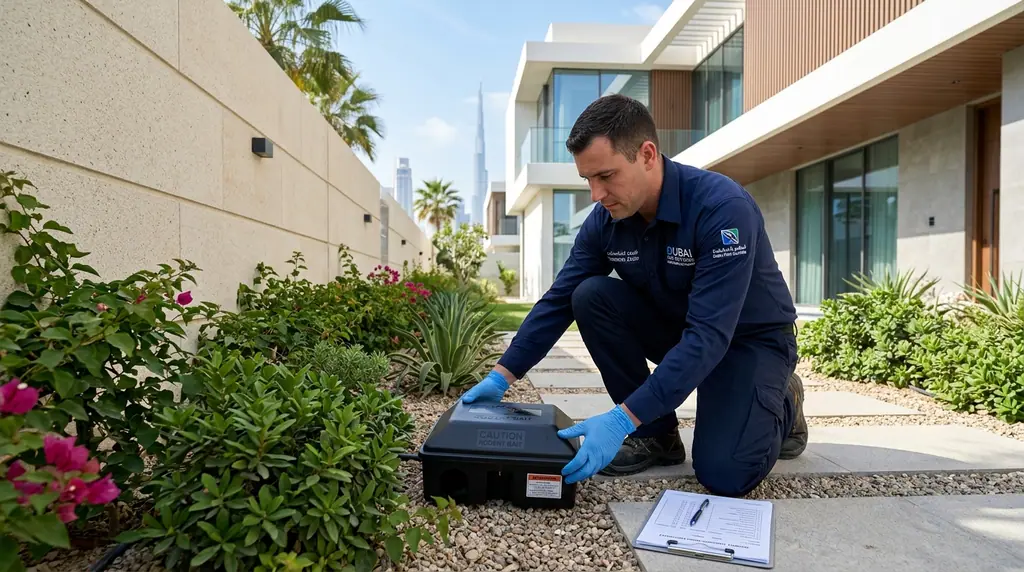
Rodents look for food, water, warmth and hidden nesting spots. Buildings can offer all of these: false ceilings, spaces behind appliances, around drain and AC pipes, food stores and behind cabinets, especially near gardens, restaurants and waste bins.
An adult mouse can pass through very narrow gaps, so a space you think is sealed may not be. That is why removing the visible rodent is not enough: you need to know how it got in and what attracted it.
Signs that suggest rodents
One sign does not confirm a problem, but repeated signs deserve attention.
Small droppings
Dark small pellets near food, in drawers or along walls.
Night noises
Scratching or running in the ceiling or walls at night when the building is quiet.
Gnawing and damage
Tooth marks on bags, wood, cables and cardboard packaging.
Greasy rub marks
Dark smears along walls where rodents regularly travel.
Strange smell
A strong distinct odour in an enclosed space, or from a hidden dead rodent.
Nests
Shredded paper or fabric gathered in warm hidden spots.
Suspect rodents?
Send photos of the signs and your area on WhatsApp and we will suggest an inspection step.
Reasonable steps at home
Preventive measures that reduce attraction and help diagnosis.
Close food sources
Store food, grains and pet food in airtight containers and do not leave food out overnight.
Manage waste
Use lidded bins, take rubbish out regularly and keep it away from the door.
Look for entry points
Check gaps around doors, windows, pipes and openings behind kitchen appliances.
Seal openings
Use suitable materials to seal small gaps, especially around pipes, instead of relying on bait only.
Reduce hiding places
Tidy storage, lift items off the floor and keep piles away from walls.
Note the signs
Record where droppings and noises occur to help the technician during inspection.
Common mistakes that prolong the problem
A classic mistake is relying on poison bait alone without sealing entry points, so new rodents keep arriving. Poison placed where pets or children can reach is a hazard, and a rodent that dies in a hidden place can leave a smell that is hard to remove.
Others include setting just one trap and waiting, moving traps around constantly, or ignoring the food and water source.
We therefore recommend a combined approach: identify the entry, seal it, reduce food, then use methods suited to the case.
When to ask for a professional inspection
We suggest an inspection when:
- You hear repeated noises in the ceiling or walls.
- New droppings keep appearing despite cleaning.
- You run a store, restaurant or commercial kitchen.
- You cannot find the entry point or nests.
- There are children or pets and you want a suitable approach.
What inspection and treatment involve
The technician starts by checking where signs appear and the routes rodents use, then looks for likely entry points inside and outside the building. A plan follows that usually includes sealing, hygiene recommendations and treatment methods suited to the place.
We do not promise guaranteed results or fixed timelines, because rodents can return if entry points or food remain, and we explain what is required from you and from building management where relevant.
Suspect rodents?
Send photos of the signs and your area on WhatsApp and we will suggest an inspection step.
Preparing the place before the visit
Simple steps that help the technician:
- Locate and photograph droppings and note noise locations.
- Tell us about pets or children in the home.
- Clear the space under sinks and behind appliances if possible.
- Do not place new poison before the visit.
- Mention any false ceiling or service room that is hard to reach.
Long-term prevention
Ongoing cleanliness, sealed gaps, waste management and reduced moisture form the basis of prevention. Periodic inspection helps in exposed places such as restaurants, stores and buildings near construction or gardens.
If signs return after treatment, tell us early; acting quickly is usually easier.
Frequently asked questions about getting rid of rodents
Is one trap enough?
Is poison alone a solution?
How do I know droppings are from rodents?
Do you seal entry points?
Is treatment safe for children and pets?
Do you guarantee rodents will not return?
Do you work in restaurants and stores?
How do I request an inspection?
Need an inspection for a rodent problem?
Send photos of the signs on WhatsApp and we will suggest the right step.