Termite Control in Dubai: Inspect First, Then Inject and Treat
For anyone who has spotted mud tubes on a villa wall, timber that sounds hollow when tapped or tiny wings by a window after a humid night. We check the foundation, wood and surroundings, then choose the right injection and spot treatment.
- We inspect wall bases, door frames, wooden floors, false ceilings and the neighboring garden
- Targeted injection through small holes at planned spots along the foundation and wall bases where needed
- We link the findings to moisture sources such as irrigation lines, AC leaks and water pipes
- A clear spoken summary of what we found, what we treated and what needs repair by someone else
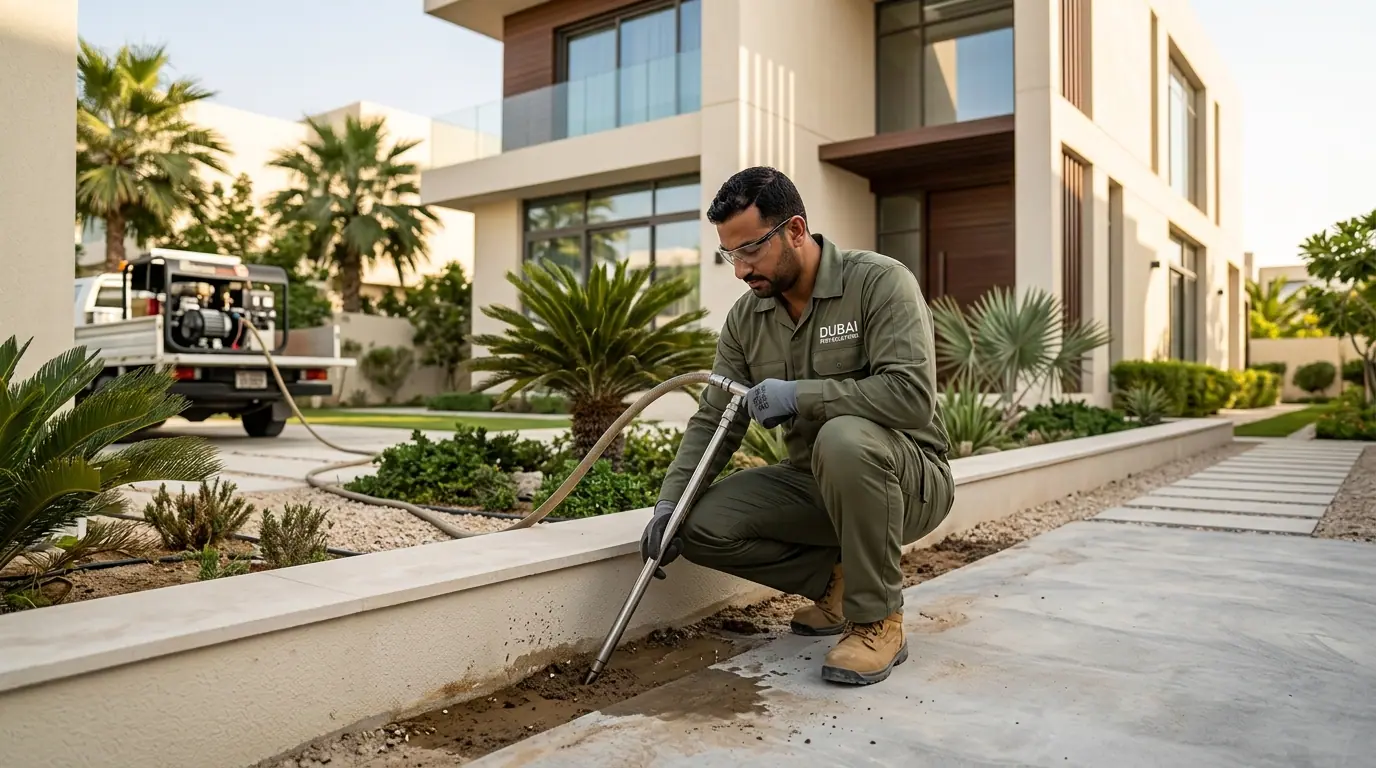
Visual and tap inspection
We trace mud tubes, tap timber and check the foundation before suggesting treatment
Injection with defined scope
We set the spots and lengths before drilling and agree how holes are closed
A look at the moisture cause
We check for leaks or overwatering that draw termites to one wall
Honest about limits
We do not promise total elimination, and we say what falls outside treatment, such as structural repair
Termites in Dubai: a quiet pest working inside walls and wood
Termites, called rimma by some, are social insects that feed on cellulose found in wood, paper, cardboard and some ceiling materials. Most of those that appear in homes start in the soil and reach a building through thin mud tubes. In Dubai, irrigated gardens, sandy soil and many pipes under floors can keep conditions damp beside a foundation, and interior fit-outs bring wood, gypsum and paper that deserve a check. People rarely see the insect itself. They see its signs: tubes, wing shells and timber that crumbles when touched.
The insect works inside wood and walls, so visible damage appears late; periodic checks help anyone with a garden or lots of timber
Small wings dropped near windows or lights after a humid night are worth checking, but alone they do not prove a colony in the building
Water leaking from irrigation, AC or plumbing can draw termites to one wall, so fixing the cause is part of the answer
Injection does not replace repairing or replacing damaged wood, which is carpentry or contractor work, not pest control
Home types that need extra attention in Dubai
The inspection path changes with the building, its garden and where the wood sits:
Villa with an irrigated garden, wall and trees
The garden wraps the foundation in damp soil, and signs often start at a wall base near a planting bed or irrigation point.
Home with many wooden doors, counters and cabinets
Lower frames and fittings against the wall are the first things we tap, and we check the voids behind them.
Building after renovation or fit-out
Leftover wood and cardboard in false ceilings and stores can feed termites, so we check shafts and plumbing voids.
Ground-floor flat or tower with a shared garden
The neighboring garden and shared irrigation can affect lower floors, and management usually needs to know so the check covers the surroundings.
Want us to price this for you now?
Send us the size and location and we will reply with a clear quote before any commitment.
Signs you can spot before the inspector arrives
These clues help us decide where to begin:
1Thin mud lines on a wall or foundation
Pencil-wide tubes run up or across concrete, marble and stone, letting termites travel away from light.
2Wood that sounds hollow when tapped
Tapping a door frame or skirting board gently with a key, damaged wood sounds empty, and an edge may give way under pressure.
3Small translucent wings dropped by a window
Winged adults leave to start new colonies in certain seasons and shed their wings near doors and lights.
4Bubbles or ripples under wall paint or paper
These can signal activity under the surface or moisture, and both deserve a check before repainting.
Where we look, inside and outside the home
We follow the routes that link damp soil to dry timber:
Exterior wall bases near planting beds and irrigation points
Wet soil sits against the foundation, the shortest path for termites to the wall and pipe openings.
Wooden door and window frames and lower thresholds
Wood touching the floor and wall absorbs moisture and is a first target, often hiding damage behind paint.
Pipe, electrical and AC openings at floor level
Termites cross from the soil through unsealed pipe gaps and get behind panels and cabinets.
False ceilings, behind counters and shelves against walls
Paper-faced boards, cardboard and leftover timber need a check if they sit near a moisture source.
Why spraying or painting over visible signs is not enough
What shows on the wood is a small part of a larger colony in the soil or wall:
Surface spray does not reach the colony
Most of the insects live in the soil or inside the wall, out of reach of spray on visible wood, and they may simply shift to another route.
Paint hides the signs without solving the cause
Repainting over tubes or damp may cover the evidence and delay the discovery of the problem.
Removing tubes alone is not enough
Termites rebuild a tube quickly if the route and moisture remain, so the entry point must be found and sealed or treated.
Replacing wood without treating the soil or wall
A new piece in the same place may be attacked again if the source stays close.
Stages of work, from inspection to follow-up
We sketch the route the insects take, then choose the right tool for each point:
Inspecting the surroundings, foundation and wood
We walk around the building and then through it, tracing tubes, tapping timber and checking the garden, irrigation points and pipe openings.
Agreeing the drilling and repair scope
We explain where we will drill and which floors are involved, and agree how holes are closed and who handles finishing afterward.
Injection into soil and wall bases
We drill small holes at planned spacing and inject a solution suited to residential use, forming a barrier around the foundation and entry points.
Treating affected wood and visible spots
We treat frames and treatable timber with a targeted product, open tubes to examine them and identify pieces that need replacing.
Moisture advice and follow-up
We guide you on adjusting irrigation, fixing leaks and keeping wood off the soil, and set a follow-up inspection date to suit the case.
Useful preparation before the inspection
This helps the inspector reach the important spots:
- Keep access clear to exterior wall bases and around planting beds, and move pots and light furniture where you can.
- Tell us where you saw tubes, wings or hollow wood, and where you noticed leaks or damp.
- Have any drawings or notes on pipes and cables under floors ready, if available, so we do not drill in a risky spot.
- In compounds and towers, tell neighbors or management, since the check may cover shared areas that need approval.
What we advise after treatment
These steps protect the work and lower the chance of the problem returning:
- Do not remove the closed holes or dig beside the foundation for a while, and do not move treated soil without asking us.
- Deal with the moisture source: adjust irrigation so it does not wet wall bases, and fix any leak or condensation around the AC.
- Keep wood and cardboard stacks off direct contact with soil and walls, and lift them off the ground where possible.
- Do not repaint affected walls until we confirm no visible activity, and watch for new tubes.
A question before you book?
Message us on WhatsApp with your situation and we will suggest the best option, no obligation.
How the work differs by building in Dubai
Injection points and coordination change with the type of property:
We inspect the foundation perimeter, garden and irrigation points, inject along identified spots, treat affected wood and notify management if a shared wall is involved.
We check timber, floors and edges adjoining shared gardens, and coordinate with management on any injection in shared areas.
We look for leftover wood, cardboard and gypsum in ceilings and stores, and suggest removing what is not needed before any treatment.
We check shelves, cardboard boxes and timber touching the floor, and trace the routes termites take toward stored goods.
Planned inspection and injection versus surface fixes
| Item | Nojoom Al Azm | Home remedies |
|---|---|---|
| Finding the route | Tracing tubes, moisture and pipes to locate the entry point | Treating the visible sign without knowing its source |
| Reaching soil and foundation | Targeted injection at defined spots after agreeing the drilling | Spraying only the visible wood or wall |
| Working around pipes and floors | Locating services and coordinating how holes are closed | Risk of random drilling into pipes or cables |
| Clarity about limits | We say what injection handles and what needs a carpenter or contractor | Assuming spray will repair damaged wood |
What decides the cost of treatment in Dubai
The quote follows the inspection and these elements, so one figure cannot fit every property:
Perimeter to inject and floor area involved
A longer foundation or more walls to treat means more product and more hours.
Type of flooring and finishes
Drilling through marble or decorative tile needs more care and planning for closing the holes afterward.
How widespread and how old the signs are
Activity in one spot differs from activity across several walls and woodwork, and may call for a follow-up visit.
Indicative Pricing Estimate
The price is set after inspection from injection length, number of spots and visits, and we give no figure before seeing the property.
The quote states what the inspection, injection, wood treatment and follow-up include, and what it leaves out, such as carpentry and painting.
Habits that make a home less attractive to termites
Aim irrigation away from walls
Point sprinklers and drip lines so they do not wet wall bases, and keep a strip of gravel or dry ground around the foundation.
Lift wood and cardboard off the floor
Do not leave timber and cardboard boxes against walls or floors; store them on metal shelves away from damp.
Fix leaks and condensation quickly
A slow drip at the AC or pipes can dampen a wall for weeks and draw termites to it.
Find the problem before the damage spreads
Tell us the type of building and what you saw and where, and the Nojoom Al Azm team will review the case and suggest a clear plan for inspection and injection.
Everything you need to know about this service
Injection means drilling small holes at planned spacing near the foundation or wall base, then pushing a solution suited to residential use into the soil or void to form a barrier in the termites’ path. We pick the spots after inspection and agree how holes are closed. It is one tool within a plan, and we do not promise it prevents every possible return.
Not always. Often work at exterior wall bases and the adjoining soil is enough. If the inspection points to activity inside the building, we may need small holes in the floor. We show you the spots in advance, agree how to close them and avoid pipe and cable routes as far as we can.
Despite the name, termites do not look like ordinary ants: the body is plump and pale, the waist is broad and the antennae are straight. Telltale signs include mud tubes and wood that crumbles from the inside. If unsure, photograph the insect or the tube and let us inspect it.
It can take time, since insects inside tubes and wood may stay active for a while, which is why we set a follow-up inspection to suit the case. We explain what we see at each visit and adjust the plan. We do not promise total elimination, but we work to reduce activity and keep watch.
We treat the insects and do not do carpentry, painting or tile repair. If wood has lost strength it may need replacing by a carpenter or contractor, and we will point out the pieces we think need it. We also agree with you how injection holes are closed before we start.
We use products meant for residential use and follow the label, and we explain which areas children and pets should avoid during the work and afterward. Tell us beforehand about an infant, an allergy or pets so we can adjust. For any medical question, please consult a doctor.
Yes, if drilling or work involves shared areas or causes noise; the owner or tenant arranges permission with management. We tell you which spots and times we need and respect quiet hours. Any treatment of a shared garden needs approval from whoever is responsible for it.
Not always, as other winged insects are drawn to light too. But wings dropped in numbers near a window or door after a humid night are worth a check. Keep samples in a sealed bag or photograph them, and we will inspect the foundation and nearby wood and tell you what we see.
Related Pest Management Services
Termite control across the UAE
A general guide to termite behavior and treatment methods in every emirate
Cleaning services in Dubai
The main page for Nojoom Al Azm services in Dubai
Pest control in Dubai
All home pest services in the emirate
Villa cleaning in Dubai
Useful after treatment to remove dust and debris
Rodent control in Dubai
For homes with other pests in ceilings and voids
Villa cleaning after injection and opening tubes
After treatment, dust, soil and debris can remain around walls, and a full villa clean helps as a service separate from pest control.
More in Dubai
- Ant control in Dubai
- Bed bug control in Dubai
- Cockroach control in Dubai
- Fly control in Dubai
- Mosquito control in Dubai
- Rodent control in Dubai
- Apartment cleaning in Dubai
- Carpet cleaning in Dubai
- Cleaning & pest control in Al Barsha
- Cleaning & pest control in Arabian Ranches
- Cleaning & pest control in Business Bay
- Cleaning & pest control in Deira