Bed Bug Control in Dubai: Inspection First, Then a Steady Plan
For anyone in a Dubai tower, villa or shared home with night bites and tiny dark spots on the mattress. We inspect the bed frame first, then combine hot steam with targeted treatment.
- A hands-on check of mattress seams, frame, headboard and nearby outlets before any treatment is suggested
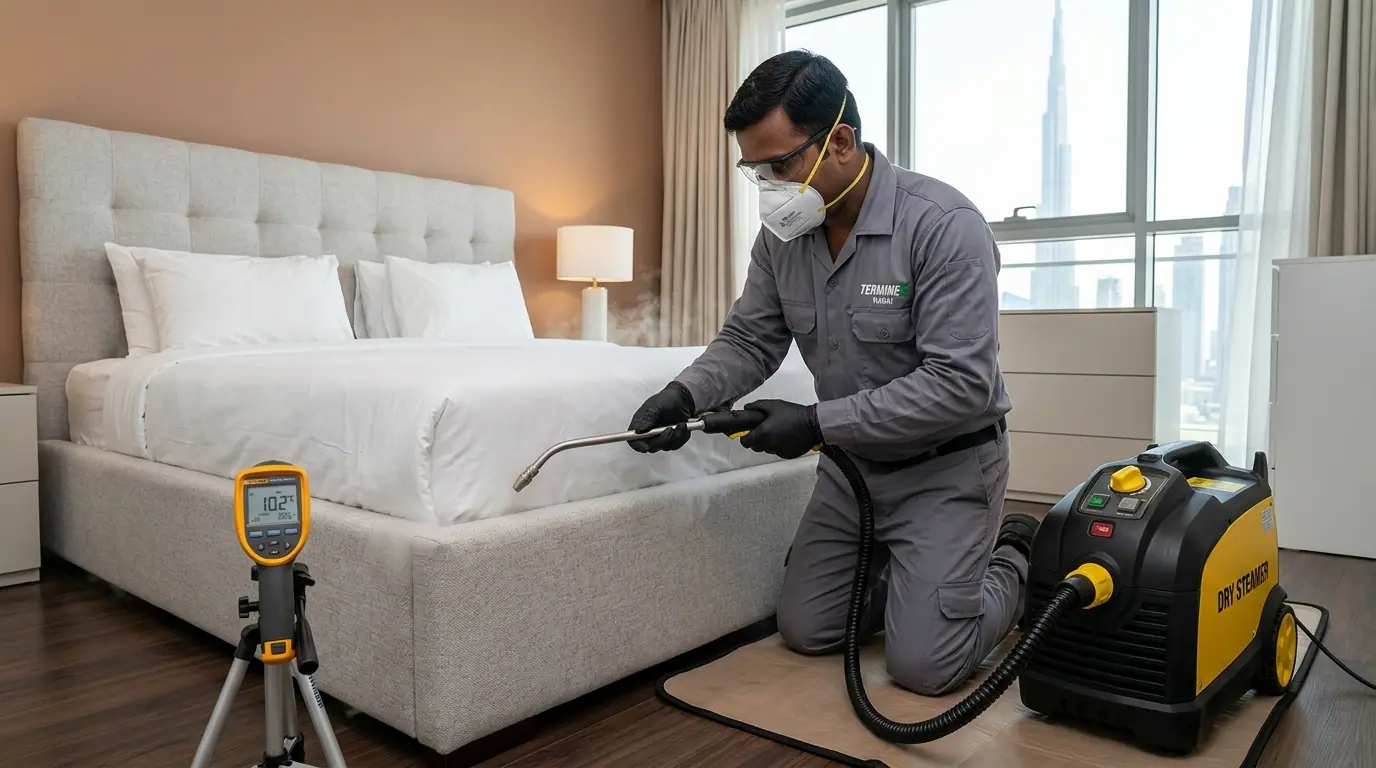
- Hot steam on cracks, joints and fabrics that tolerate heat, tested on a small spot first
- Coordination with building management on the service lift, access permit and quiet hours
- A follow-up visit after about two weeks, since one visit does not always settle it
Diagnosis first
We look for insects, shed skins and spotting, since bites alone are not proof
Steam used with judgment
Applied where the material tolerates heat; thin leather and veneer are handled differently
Scope explained up front
You hear which rooms are covered and how many visits we suggest before work begins
Results reviewed with you
We walk the treated spots together and agree what still needs watching
Why bed bugs are hard to deal with inside a Dubai home
A bed bug is a flat, reddish-brown insect about the size of an apple seed. It usually feeds at night, then returns to a hiding place close to the bed. Where air conditioning runs all year, no cool season slows it down, because bedroom temperatures barely change. What raises the odds of spread in Dubai is how people live: frequent flights, furnished flats with changing tenants, shared housing and second-hand furniture moving between homes. Bed bugs do not mean a home is dirty. They follow people and luggage, not dirt.
Insects and eggs cling to suitcases, folded clothes and furniture frames, so they often arrive after a trip or with used furniture
They can hide in a gap under a millimeter wide and survive months without a meal, so a bite-free week does not mean the problem is over
They neither fly nor jump, but they crawl along walls, pipes and shared outlets between neighboring apartments
Replacing the mattress alone rarely fixes it, because the frame and surroundings may hold the rest
How infestations show up in Dubai homes
Inspection and treatment change with the type of home and how many people sleep there:
Studio or one-bedroom in a tower
Bed, sofa and wardrobe sit close together, so insects move between them fast. We usually treat the whole room, not just the bed.
Furnished or short-stay apartment
Many guests and suitcases raise the chance of entry. We check spare pillows, linen and storage, and fit the visit around bookings.
Shared housing with several beds
Bunk beds and shared wardrobes offer many hiding spots. Everyone must cooperate, and belongings should not move between rooms.
Villa with a maid’s room or guest rooms
An infestation can start in a rarely used room before reaching family bedrooms, so we inspect the far rooms too.
Want us to price this for you now?
Send us the size and location and we will reply with a clear quote before any commitment.
Signs worth noticing before the inspector arrives
Taken together, these clues say more than bites alone:
1Tiny dark spots on the mattress cover and pillow edges
Pen-tip dots in brown or black are insect droppings. They sit near seams and corners, and under the sheet.
2Pale brown empty shells
Young bed bugs molt five times before adulthood, leaving see-through casings in cracks, under piping and in frame joints.
3Small blood spots on the sheet when you wake
These come from crushing a fed insect in your sleep or from minor bleeding after a bite, often near the feet.
4Bites in rows or clusters on arms, neck and legs
Itchy welts may appear hours later or take two days, and some people in a home never react despite an infestation.
Where we look in the room before any treatment
Hiding places cluster, so we inspect a wider radius around the bed than most people expect:
Mattress seams, piping and zipper edges
The folds shelter insects, eggs and shed skins right beside the sleeper.
Bed frame joints, slat holes and hollow metal legs
Wood joints, recessed screws and hollow tubes hide groups away from light and routine cleaning.
Upholstered or wall-mounted headboard
The gap behind the headboard and its fabric backing is often overlooked in a self-check.
Bedside tables, outlets and nearby picture frames
Insects move to the next surface with cover once spots nearest the bed fill up.
Why home attempts so often disappoint
Many people try store products first. These are the usual reasons the result falls short:
Random spraying scatters the insects
Bugs that meet repellent can flee into neighboring rooms or apartments, turning a local problem into a spread-out one.
Eggs hide where spray does not reach
Females glue eggs deep in seams and cracks. Surface spray misses them, so a new generation hatches within days.
Washing bedding does not treat the frame
Hot washing helps washable fabrics but does nothing for the frame, the wall or the headboard.
Throwing out the mattress can move the problem
Dragging an unwrapped mattress through lifts and corridors can spread insects, and a frame that still carries them infects the new mattress.
How we work, step by step
The order matters more than any single product, because a mistake in sequence lets insects return:
Questions and a focused inspection
We ask where symptoms appear and about recent travel and new furniture, then inspect the bed with bright light and a magnifier.
Agreeing scope and preparation
We explain which rooms are needed, the likely visits and what to prepare, and set a time that fits building approvals.
Hot steam on hiding spots
We pass dry, hot steam slowly over seams, joints, cracks and cavities that tolerate heat, after testing a small area.
Targeted treatment to complement the steam
Where steam reaches poorly, we apply a product suited to residential use in cracks and voids, following the label.
Mattress protection and prevention advice
We recommend a tight mattress and pillow cover and explain how to wash fabrics, store luggage and inspect used furniture.
Follow-up visit after about two weeks
We inspect the beds again for new insects after remaining eggs hatch, and repeat treatment only where needed.
What helps to prepare before the crew arrives
A little preparation saves time and limits spread inside the home:
- Ask building management to book the service lift or an access permit if the tower requires one; the tenant or owner arranges this.
- Bag bedding, pillows and nearby clothes in sealed plastic without shaking them, and wash them at a temperature the fabric allows.
- Do not move furniture or the mattress to another room before the inspection, as this can spread insects.
- Keep children, pets and plants out of the room, and tell us about infants or anyone with asthma or allergies.
After the visit: what to do next
Behavior after treatment is part of the result, and some habits can undo it:
- Follow the waiting time the technician gives before children or pets return and before touching treated surfaces.
- Bring washed bedding back in clean bags and fit the mattress cover before making the bed.
- Do not scrub the treated cracks or wipe treated edges and joints until the follow-up visit.
- Keep sleeping in the same bed rather than moving between rooms; a few new bites in the first days can happen.
A question before you book?
Message us on WhatsApp with your situation and we will suggest the best option, no obligation.
What changes with the type of home in Dubai
The same room is treated differently when the building and its use change:
We inspect bed, sofa, wardrobe and outlets, then treat a wider area than the bed. If signs appear in more than one unit, we suggest telling management.
We identify infested rooms, guest rooms and the maid’s room, and treat each separately while keeping bedding from moving between them.
We check beds, spare linen, wardrobes and the storage room, and plan the work between two bookings.
We inspect every bed and wardrobe, and coordinate treatment of neighboring rooms around the same time so insects do not shift.
Inspection, steam and follow-up versus quick fixes
| Aspect | Nojoom Al Azm | Trying it yourself |
|---|---|---|
| Confirming the problem | Inspection with light and magnification for insects, shells and droppings | Relying on bites, which may come from another insect or an allergy |
| Reaching cracks and frames | Hot steam on joints and cavities, backed by targeted treatment | Surface spraying that often misses where eggs hide |
| Handling furniture and fabrics | A small test spot first, then a decision on what suits steam | Risk of damaged leather and veneer, or ignoring nearby furniture |
| Checking after the eggs hatch | A visit after about two weeks to review what appeared | Usually no review, so survivors can keep breeding |
What decides the cost in Dubai
No single price fits every home. After inspection, the quote reflects these factors:
Number of rooms and beds affected or suspected
A one-bed room differs from a two-bedroom flat or a villa, and each extra room adds inspection and steaming time.
Size and age of the infestation
An early case in one corner needs less work than one spread into wardrobes, and may need an extra follow-up.
Type of furniture and fabrics
Solid wood steams easily, while upholstery, leather and thin veneer call for a different technique and more time.
Indicative Pricing Estimate
The price is set after the inspection, based on rooms, infestation size and visits, and we suggest no figure before seeing the room.
The quote lists what the inspection, steam, targeted treatment and follow-up include, so there are no surprise add-ons.
Habits that lower the chance of the insect coming back
Check the hotel room before opening your suitcase
Put the bag on a rack or hard surface, look at the mattress seams, and wash clothes on return before they go in the wardrobe.
Fit a tight mattress and pillow cover
A proper encasement seals seam hiding spots and makes any insect easier to spot.
Inspect used furniture before it comes in
Check joints, folds and rear fabric before it goes up to the apartment.
Quiet nights start with a careful look
Tell us the type of home, the number of rooms and where symptoms appear, and the Nojoom Al Azm team will review the case and suggest a clear plan.
Everything you need to know about this service
Steam is a useful tool for seams, joints and fabrics that tolerate heat, but it does not reach every cavity or suit every material. We pair it with targeted treatment in cracks it cannot reach, and we begin with an inspection that shows where each tool is needed. We explain the limits and do not promise a final fix from one visit.
Bites alone are not enough, because they look like those of other insects. Stronger evidence is dark spots on the sheet, empty shells and live insects near seams. We inspect the bed with light and magnification and show you what we find. If we find nothing, we say so and point you to other steps.
Often not, because the inspection shows whether the mattress can be treated. If you decide to dispose of a damaged one, wrap it tightly before moving it through lifts and corridors. We do not encourage replacing it before checking the frame, since insects can move to the new one.
We usually suggest a treatment visit and a follow-up about two weeks later, because some eggs may hatch afterward. For larger infestations, or furniture that is hard to steam, we may suggest an extra visit. We explain this before starting so you know the scope.
The technician sets the time based on the product used, the ventilation and the label instructions. Afterward we advise airing the room and not scrubbing treated spots before the follow-up. If there is an infant or a pet at home, tell us beforehand so the timing can be planned.
Yes. The access permit and service-lift booking stay with the tenant, owner or building management, since we work within building rules. Tell the owner or management early, because an infestation can spread to neighboring units, and our crew can coordinate with the slot you obtain.
Usually they do not solve it. Eggs inside cracks are not reached by spray, and some products push insects into other rooms. Wrong use inside a closed room may also be unsuitable for children. We recommend an inspection first, then a specific plan, and no random spraying while you wait.
They can if they arrive again on luggage or used furniture, or from a neighboring unit, or if some insects stayed in a spot the treatment missed. That is why we schedule a follow-up and give simple prevention steps. We never promise they will not return, but we work to lower the chance.
We use products meant for residential use and follow the label, and we explain how long to stay out of the room and how to clean surfaces that touch skin. Tell us in advance about children, pets or allergies so we can choose a method. For medical questions, please consult your doctor.
Related Pest Management Services
Bed bug control across the UAE
A general guide to the insect’s life cycle and our work method
Cleaning services in Dubai
The main page for Nojoom Al Azm services in Dubai
Pest control in Dubai
All home pest services in the emirate on one page
Mattress cleaning in Dubai
A separate service, useful once follow-up is complete
Cockroach control in Dubai
For homes with other insects in the kitchen and bathroom
Mattress cleaning after treatment ends
Mattress cleaning is separate from bed bug treatment, but it helps once follow-up is finished by removing dust and stains.
More in Dubai
- Ant control in Dubai
- Cockroach control in Dubai
- Fly control in Dubai
- Mosquito control in Dubai
- Rodent control in Dubai
- Termite control in Dubai
- Apartment cleaning in Dubai
- Carpet cleaning in Dubai
- Cleaning & pest control in Al Barsha
- Cleaning & pest control in Arabian Ranches
- Cleaning & pest control in Business Bay
- Cleaning & pest control in Deira